US-South Korea Trade Talks Enter Tense Countdown Phase
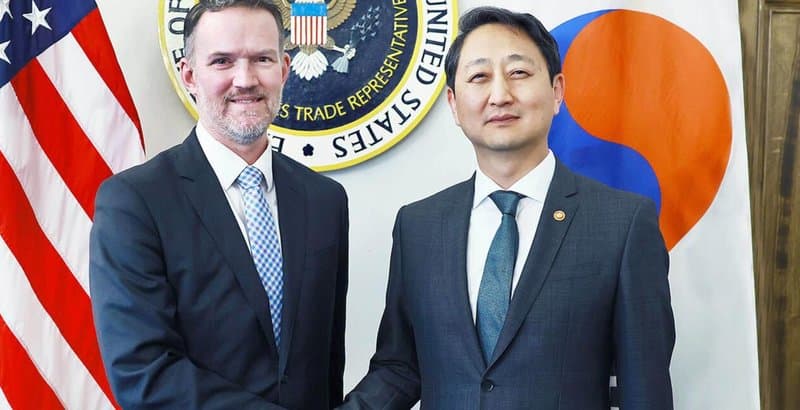
In July 2025, trade negotiations between the United States and South Korea entered a crucial stage. South Korea's chief trade negotiator, Ryu Han-koo, and Minister of Trade, Industry, and Energy Kim Jung-kwan recently held joint talks in Washington with US Commerce Secretary Howard Lutnick, focusing on the final opportunity for an agreement before "reciprocal tariffs" are imposed.
With only a few days remaining before the August 1 deadline set by the Trump administration, both US and South Korean sides expressed the desire to reach a "mutually beneficial agreement" by this date to avoid escalating tension in bilateral trade due to increased tariffs.
25% Reciprocal Tariff Pressure Looms
According to a previous statement by President Trump, if South Korea fails to reach an agreement on tariff structures with the US by the deadline, the United States will impose a reciprocal tariff of up to 25% on Korean products. If implemented, this move is expected to severely impact South Korea's industrial exports, especially in critical sectors such as steel, automotive, and semiconductors.
This threat prompted South Korea to quickly mobilize senior officials to the US to seek swift political and economic resolutions.
Focus on Manufacturing Cooperation and Bilateral Coordination Mechanism
According to the South Korean Ministry of Trade, Industry, and Energy, the current round of talks not only focuses on the tariff agreement itself but also extends to broader manufacturing cooperation issues. Both sides discussed how to establish a closer supply chain collaboration mechanism and deepen mutual trust in areas such as technology transfer, green energy, and digital trade.
The South Korean representatives emphasized that as the global manufacturing landscape is being restructured, South Korea and the US have a responsibility to jointly build a stable, transparent, and resilient cooperation framework to cope with the ever-changing global market.
Ryu Han-koo: To Advance a New Round of Negotiations with a "Pragmatic Spirit"
In a briefing after the meeting, Trade Negotiation Minister Ryu Han-koo stated that South Korea would respond to US concerns with the "greatest sincerity" and push for a new round of negotiations to be held "as soon as possible" to clarify differences before the deadline.
Although no specific proposal drafts were announced, South Korean officials hinted at flexible adjustments in some sensitive areas such as domestic subsidies and market access to exchange for US concessions on tariffs.
Washington Stance Firm but Leaves Room for Maneuver
The US side continued to emphasize the importance of "fair trade." Commerce Secretary Lutnick pointed out during the talks that the US would ensure its industries are not affected by "unfair treatment" but also acknowledged the necessity of resolving disputes in negotiations with allies.
He stated that as long as South Korea provides constructive responses, the US is willing to consider more flexible options.
Outlook: Opportunities for Cooperation and Political Variables Coexist
Although the current round of talks did not finalize a text, it is seen as setting a "positive tone" for negotiations before August. Experts believe that the deep interconnectedness between South Korea and the US in manufacturing, strategic materials, and technology policies suggests momentum for reaching an agreement remains.
However, given the recent strong trade rhetoric from the Trump administration, future progress will still depend on the two countries finding compromises on their core interests. In the short term, global markets will also closely monitor the schedule of subsequent US-South Korea negotiations and any possible policy changes.