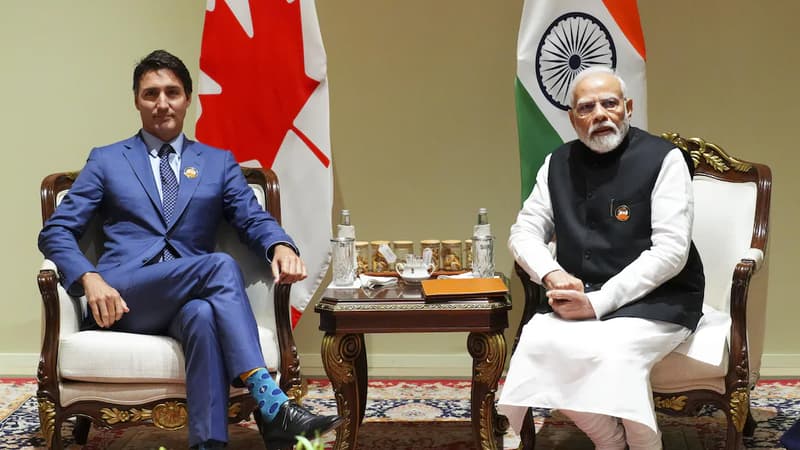
Meeting Between Two Leaders to Restart Free Trade Negotiations
During the G20 summit held in South Africa, Indian Prime Minister Modi and Canadian Prime Minister Trudeau held a bilateral meeting, announcing plans to resume negotiations related to a free trade agreement. This decision is seen as an important signal of warming relations between the two countries, opening a new window for future economic and strategic cooperation.
According to a statement by the Indian Ministry of External Affairs, the leaders agreed to initiate a new round of discussions concerning the Comprehensive Economic Partnership Agreement (CEPA), aiming to create a more stable and transparent framework for bilateral trade and investment through an institutionalized negotiation mechanism.
Clear Trade Growth Goals, High Expectations for Cooperation Potential
India's statement emphasized a goal to increase bilateral trade to $50 billion by 2030. Current trade volume falls short of this target; according to official Canadian data, the trade volume for goods and services between India and Canada was approximately 31 billion Canadian dollars (about 22 billion USD) in 2023, indicating significant growth potential.
During the meeting, Modi stated that India's continuously expanding economy, market size, production capacity, and consumption potential will provide long-term growth opportunities for Canadian businesses. Trudeau remarked that building closer trade ties with "one of the world's fastest-growing major economies" is a crucial part of Canada's future economic diversification.
Analysts believe that the establishment of a clear timetable for trade cooperation shows increased momentum at the political level.
Bilateral Relations Warm Up, Security Cooperation Also Advances
Aside from economic issues, Trudeau revealed that communication between the law enforcement and intelligence agencies of the two countries is also advancing. Despite some diplomatic tensions over the past year, dialogues during this summit have sent clear signals of easing relations.
Trudeau has accepted Modi's invitation for a visit to India early next year, where both sides are expected to further consolidate political trust and lay a foundation for comprehensive cooperation.
Diplomatic observers note that compared to previous tensions, relations between the two countries are showing signs of significant improvement, with the resumption of trade talks being seen as a key advancement in this trend.
Canada Seeks Diversified Export Markets, India as a Priority
In recent years, Canada has faced trade uncertainty pressures from the United States, with most of its export products still relying on the U.S. market. The government has started actively seeking additional emerging economies as partners. One of the long-term visions proposed by the Trudeau administration is to double export volume to non-U.S. regions by 2035.
Within this strategic context, India, with its large population, rapidly growing domestic demand, and potential for manufacturing expansion, is seen as one of Canada's most strategically valuable partners. Trudeau pointed out that increasing the access of Canadian goods to the Indian market can provide new growth points for Canadian businesses while reducing their dependency on the U.S. market.
Negotiations Resumption Lays Foundations for Cooperation, Progress Requires Close Attention
While both parties have expressed strong willingness to cooperate, analysts caution that trade negotiations usually involve complex topics such as service sector access, tariff arrangements, and investment protection, which could affect the speed of progress.
The rapid warming of Indo-Canadian relations symbolizes both countries' attempts to reposition their cooperation within the broader geopolitical landscape. With Trudeau's visit to India upcoming next year, it is anticipated that both sides will speed up negotiation progress, potentially achieving more specific outcomes in digital economy, agricultural supply chains, education collaboration, and energy transition.
Overall, the resumption of negotiations injects new momentum into Indo-Canadian bilateral relations, marking the two nations' pursuit of more active participation in the international economic network amidst the backdrop of a reshaping global trade landscape.