Former Auto Executive Predicts Tesla May Face a "Decade of Survival Struggle"
Tesla's future is once again a hot topic in the global automotive industry.
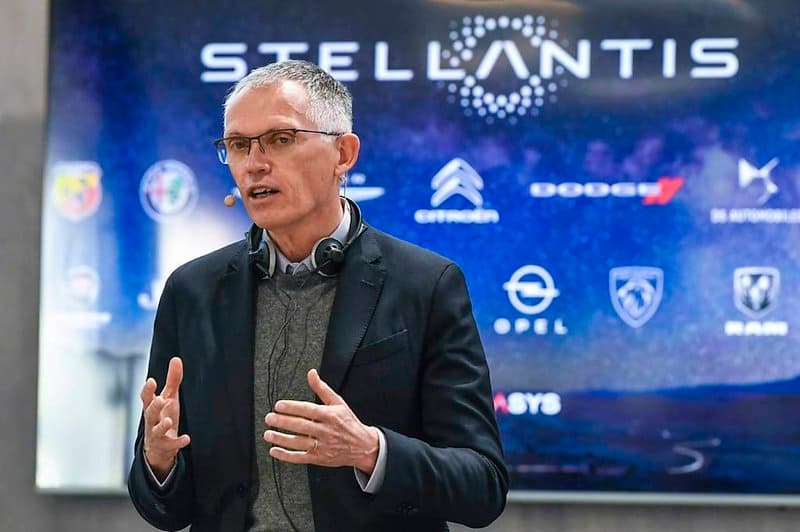
According to Les Echos, former Stellantis CEO Carlos Tavares recently predicted in an interview that Tesla might find it difficult to survive over the next decade. He believes company founder Elon Musk will eventually exit the automotive industry to focus on more appealing projects such as artificial intelligence, humanoid robots, or space exploration.
Tavares straightforwardly pointed out, "Tesla is suffering strong competition from Chinese competitors, especially BYD. BYD's advantages in cost control and production efficiency could be the key factors that overshadow Tesla."
BYD's "Efficiency Offensive" Shakes Tesla's Global Position
The former head of the automotive giant expressed that BYD, with its lower production costs and faster product iteration speed, is encroaching on Tesla's market share in core regions.
He said, "Tesla's valuation is extremely high, but its profitability model faces real challenges. BYD's products are more practical and economical, gradually eroding Tesla's market space."
Data shows that over the past five years, Tesla's market share in China has dropped from about 16% in 2020 to its current 5%. Although Tesla's deliveries in China grew by 33% year-on-year in the third quarter, overall market competition is becoming increasingly fierce.
Meanwhile, BYD has consecutively surpassed Tesla in global electric vehicle sales for several quarters, establishing itself as the new industry benchmark.
Market research firm JATO Dynamics pointed out that Tesla still maintains a technical lead in the high-end pure electric field, but BYD is driving a "cost revolution" with its complete battery supply chain and local manufacturing system, forcing the industry into a new reshuffling period.
Musk Responds Firmly: Calls Opponent "Knows Nothing"
In response to Tavares' comments, Musk rarely replied on social platform X with just "He knows nothing," a sharp yet brief retort that once again showcased Musk's characteristic toughness.
Industry insiders believe Tavares' comments reflect more on the traditional auto industry's skepticism towards the electric vehicle business model.
An automotive industry analyst noted, "Tesla's challenges are indeed increasing, but to judge that it will 'cease to exist' in ten years is overly arbitrary. Musk's diversification strategy might be exactly its path to survival."
It is noteworthy that under Tavares' tenure at Stellantis, the company's stock performance was poor. Electric vehicle analyst Sawyer Merritt commented on social media, "Stellantis' stock return was -21% during Tavares' term, which may explain why he is the 'former CEO'."
Global Electric Vehicle Competition Reshaping
The current global electric vehicle market is entering an accelerated phase of differentiation. U.S. domestic manufacturers face cost competition and supply chain pressure from Chinese brands, while European traditional automakers are struggling in energy policy transitions and R&D investments.
Tesla remains technically advanced in AI and autonomous driving, with its AI chips, self-developed algorithms, and "full self-driving" systems considered key supports for the company's valuation. But analysts indicate that if Tesla cannot match Asian competitors in terms of price and capacity, its market share will be further compressed.
According to Bloomberg New Energy Finance (BNEF), by 2035, Chinese brands are expected to occupy nearly 50% of the global electric vehicle market, while Tesla's share may drop to less than 10%.
Musk's Next Move: Focus on AI and Robotics?
Tavares emphasized in the interview, "Musk has the capability of cross-industry innovation; he might ultimately choose to leave the increasingly competitive and low-margin automotive sector."
Musk himself has repeatedly stated that AI and the humanoid robot project "Optimus" will be Tesla's core growth points in the next decade.
Industry insiders generally believe that if AI and robotics technology commercialization progresses smoothly, Musk's focus may shift from "automaker" to "technology platform provider."
A recent Morgan Stanley report noted, "Tesla is more like an AI-driven tech company rather than a traditional automaker."
A Decade of Challenges with Coexisting Doubts and Innovations
Tavares' prediction has sparked intense discussion within the industry, casting new uncertainties over Tesla's future.
Whether it is surpassed or regains leadership, Tesla will face a more complex and globalized competitive landscape.
In a new era where AI, energy, and manufacturing technologies intertwine, each of Musk's strategic pivots could determine the industry's direction.
As analysts comment, "Whether Tesla will still be around in ten years depends on its ability to continue defining the future."