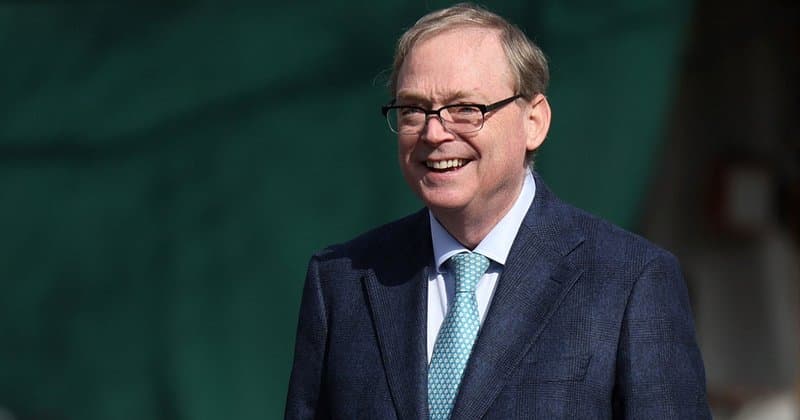
Hassett States Clearly, Emphasizes Institutional Boundaries
Amidst growing debates over Federal Reserve personnel and policy independence, Kevin Hassett, Director of the White House National Economic Council, made a rare and direct clarification. He publicly stated that even if he were to become the future Federal Reserve Chair, he would only consider the president's views as advisory rather than as authoritative directives.
This statement is widely interpreted as an attempt to redefine the boundaries between political power and monetary policy. Hassett emphasized that the Federal Reserve's responsibility is to make decisions based on data and collective discussions, not in response to any single political figure's preferences.
Responding to Presidential Remarks, Downplaying Influence
Hassett's remarks come in the context of Trump's recent public comments that the president should have a say in interest rate policy. Trump has long expressed dissatisfaction with high interest rates, repeatedly suggesting that future Federal Reserve chairs should more actively support rate cuts.
In response, Hassett did not outright deny the president's right to express opinions but deliberately downplayed their weight. He pointed out that the president is just one of many voices that can be consulted, and his views are only worthy of discussion when strongly supported by data, not possessing equal voting rights with members of the Federal Open Market Committee.
Federal Reserve Independence in the Spotlight Again
With Powell's term nearing its end, the independence of the Federal Reserve has once again become a central issue of concern for the market and academia. For decades, the Federal Reserve’s institutional design has consistently emphasized maintaining distance from executive power to ensure the credibility and foresight of monetary policy.
Hassett’s statement sends a clear signal at this sensitive juncture. He emphasized that the Federal Reserve's interest rate decisions should be formed through consensus among the Board and the FOMC, where external opinions can be discussed but can also be vetoed.
Strategic Considerations in the Chair Candidate Race
Among potential candidates for Federal Reserve Chair, Hassett is considered one of the most politically connected, making his statements draw particular attention. In contrast, another hot candidate, Kevin Walsh, has a more traditional central banking background.
Analysts suggest that Hassett’s emphasis on independence at this time is both a response to market concerns and a strategic declaration aimed at alleviating worries about a "politicized central bank." This statement helps stabilize market expectations for continuity in future policy.
Balancing Political Pressure and Market Confidence
In recent years, major central banks around the world have faced greater political pressure, and the United States is no exception. The market generally believes that if central banks are seen as policy tools, their ability to manage inflation and guide interest rates will be significantly weakened.
Hassett aims to convey that even if the White House takes a strong stance, the Federal Reserve still has institutional space to refuse. This statement partially alleviates market concerns about the erosion of policy independence.
Uncertainty Remains in the Future
Although Hassett’s words are clear, future personnel arrangements and actual policy operations remain uncertain. Whether Trump will ultimately choose a more "compliant" candidate remains a key concern for the market.
What is certain is that in the current highly sensitive context of interest rates, inflation, and economic growth, the independence of the Federal Reserve is no longer just an institutional issue but a key variable affecting asset pricing and market confidence. Hassett's statement temporarily provides a clear stance on this debate, but the real test may still lie in future decisions.