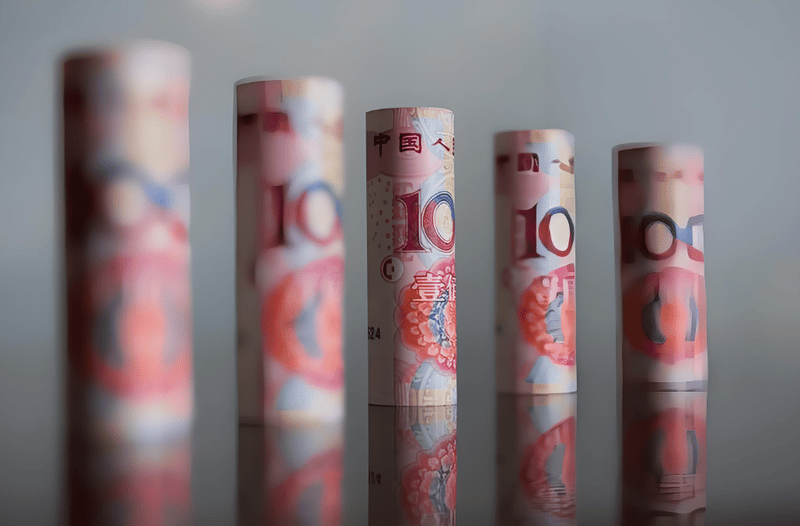
Moderate Adjustment in RMB Central Parity
On September 9, data from the China Foreign Exchange Trading Center showed that the RMB central parity rate against the US dollar reported 7.1008, adjusted up by 21 basis points. This moderate adjustment reflects the central bank's intention to maintain RMB exchange rate stability and highlights the cautious atmosphere in global financial markets ahead of the Federal Reserve's decision.
Market Driven by Expectations of Fed Rate Cut
As the US labor market cools and inflation pressures ease, there is a widespread market expectation that the Federal Reserve will cut rates at its policy meeting on September 17. According to futures market pricing, a 25 basis point rate cut is almost a certainty, with nearly a 90% probability. However, about 12% of investors believe the Fed may take a more aggressive 50 basis point rate cut to swiftly stimulate the economy.
Debate Over 25 Basis Points or 50 Basis Points
Historically, the Fed tends to adjust rates gradually in non-emergency situations. Nonetheless, given the recent weak employment data and increased uncertainty in US fiscal policy, some analysts argue that a 50 basis point rate cut is not entirely out of the question. If this scenario comes to pass, it would put greater pressure on the US dollar index, thereby providing a boost to emerging market currencies, including the RMB.
Potential Impact on Global Exchange Rates
As the US dollar is an international reserve currency, its policy trends often affect global exchange rates. If the Fed cuts rates by only 25 basis points, the dollar may remain relatively stable, while the RMB's trajectory will depend on China's economic recovery pace and capital flow conditions. However, if the rate cut reaches 50 basis points, the dollar might weaken significantly, potentially providing room for RMB appreciation.
Domestic Policy and Market Signals
Against the backdrop of increased global uncertainty, the PBOC continues to signal exchange rate stability through slight adjustments in the central parity. Analysts point out that maintaining the 7.10 threshold reflects a policy stance against rapid depreciation of the RMB and offers stability in expectations for businesses and investors. Simultaneously, the bidirectional volatility of the RMB is becoming more pronounced as market forces play an increasing role in exchange rate formation.
Investors Maintain Cautious Approach
Currently, the main focus of the foreign exchange market remains on the Fed's final decision. Before this outcome is revealed, investors generally maintain a cautious stance, with trading ranges constrained. If the Fed opts for a small rate cut, the RMB exchange rate is expected to remain stable within the current range. A substantial rate cut, however, could see the RMB strengthen short-term, but also lead to a new round of adjustments in capital flows and market expectations.
Exchange Rate Challenges in the Critical Week
In the coming week, global exchange rate markets will face multiple challenges. Besides the Fed's interest rate decision, US inflation and employment data, and China's latest economic indicators will be key factors influencing the RMB's trajectory. Overall, in the short term, the RMB exchange rate remains balanced between policy support and the interplay of external factors.
From the market's perspective, the Fed's choice this time not only determines the short-term trend of the dollar but will also profoundly impact the future direction of the RMB and other major currencies.