What is the U.S. Dollar Index?
The U.S. Dollar Index (USD Index) is a measure of the value of the U.S. dollar relative to a basket of other major currencies. Its purpose is to provide a benchmark for the dollar's overall performance in the international forex market. The USD Index is typically calculated using a weighted average of various currency exchange rates to reflect the relative value of the dollar in the international currency market.
The weighting of the USD Index is usually based on trade volumes and foreign exchange reserves between the United States and other countries. The main currencies included are the Euro, Japanese Yen, British Pound, Canadian Dollar, Swedish Krona, and Swiss Franc. These currencies hold significant positions in international trade and financial markets, and their exchange rates have substantial influence on the dollar.
Composition and Weightings of the U.S. Dollar Index
The composition and weightings of the U.S. Dollar Index are determined by the importance of a basket of currencies and their trade relationships with the United States. Here are the commonly used component currencies and their respective weightings.
Euro (EUR): 57.6%
- Japanese Yen (JPY): 13.6%
- British Pound (GBP): 11.9%
- Canadian Dollar (CAD): 9.1%
- Swedish Krona (SEK): 4.2%
- Swiss Franc (CHF): 3.6%
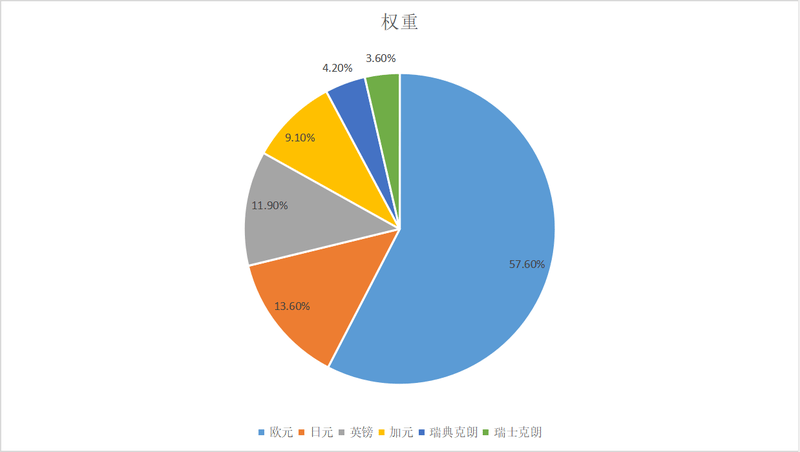
These weightings are calculated based on trade volumes and foreign exchange reserves between the U.S. and various countries. The Euro is the largest component, dominating the USD Index. Its exchange rate significantly impacts the index's movements. Although other currencies have smaller weightings, they still play an important role in calculating the USD Index.
It's important to note that the component currencies and their respective weightings may be adjusted based on market changes and shifts in the international economic landscape. Thus, the composition of the USD Index can vary slightly over time and among different data providers. Investors and traders should closely monitor relevant data sources and the published weightings.
Factors Affecting the U.S. Dollar Index
Given the complexities of the market and the economy, various factors can influence the U.S. Dollar Index. Here are some common influencing factors.
- U.S. Economic Data: Economic data from the U.S., such as GDP, employment figures, and inflation rates, significantly affect the USD Index. Strong economic data generally supports a stronger dollar, while weak data can lead to a weaker dollar.
- Monetary Policy: The Federal Reserve's monetary policies have a crucial impact on the USD Index. Tightening policies or raising interest rates can enhance the dollar's appeal, pushing the index upward. Conversely, loosening policies or lowering interest rates can weaken the dollar.
- Geopolitical and Global Economic Landscape: Geopolitical events, trade disputes, and international tensions can all impact the USD Index. These factors may create market uncertainty, driving investors to safe-haven assets like the dollar, thereby pushing the index upward.
- Global Currency Market Liquidity: As the global reserve currency, the dollar's liquidity and demand also influence the USD Index. When global market liquidity is tight, investors tend to increase their demand for dollars, pushing the index upward.
- Movements of Other Currencies: Since the USD Index measures the dollar against a basket of currencies, the performance of these other currencies also affects the index. If other currencies strengthen, the dollar's relative value may decrease, causing the index to drop.
Main Uses of the U.S. Dollar Index
The U.S. Dollar Index serves various important functions in financial markets. Here are some of its common uses.
- Measuring the Dollar's Relative Value: The USD Index is a measure of the dollar's exchange rate trends against a basket of other major currencies. It provides a quantitative way to observe the dollar's overall performance in the international forex market, helping investors and traders understand the dollar's strength.
- Forex Trading and Risk Management: The USD Index is widely used in forex trading and risk management as a measure of the overall market trend. Traders can use the index's movements to formulate forex trading strategies and decisions, such as hedging exchange rate risks or engaging in cross-currency arbitrage.
- Asset Allocation and Investment Decisions: For global investors, the USD Index can serve as a reference indicator for asset allocation and investment decisions. Investors may assess the performance of dollar-denominated assets based on the index's trends and adjust their portfolios accordingly, such as increasing the proportion of dollar assets during times of dollar strength.
- Influencing Other Markets: The USD Index's movements can influence other markets, particularly assets and commodities related to the dollar. For example, oil prices often have an inverse relationship with the dollar, so investors might use the index's trends to predict the oil market.
- Economic Data Analysis: Changes in the USD Index can be combined with U.S. economic data to help analysts and economists assess the health of the U.S. economy. A strong USD Index may indicate a relatively strong U.S. economy, while a weak index might reflect downward economic pressures.
In summary, the uses and influencing factors of the U.S. Dollar Index may vary according to the needs of individuals and institutions. Different market participants might use the USD Index for different purposes based on their goals and strategies.