

Government Shutdown Sets New Record
As of this Wednesday, the U.S. federal government has been shut down for 22 consecutive days, setting the second-longest record in history, surpassed only by the 35-day shutdown at the end of 2018. With sharp differences between the two parties on the spending bill, prospects for reopening the government remain distant. A large number of government employees are forced to take unpaid leave or have their salaries delayed, public services are disrupted, and the operational efficiency of federal agencies has significantly declined.
This shutdown has sparked widespread political and social attention. Analysts point out that this fiscal impasse is not only a manifestation of budget disagreements but also reflects the deep-seated polarization in American politics.
Cause: Healthcare Policy Dispute Triggers Funding Deadlock
The current shutdown stems from the Senate's failure to pass a short-term funding bill. Democrats refused to support the bill because it did not include provisions for increased healthcare spending. Democrats are demanding an extension of tax credit measures under the Affordable Care Act (ACA) to prevent a significant rise in healthcare costs for millions of Americans in 2026.
The Republicans insist that Democrats are using the government shutdown as a bargaining chip, attempting to force them into accepting excessive fiscal spending demands. The opposing stances on healthcare issues have brought budget negotiations to a complete halt.
Political commentators note that health care has long been a focal point of partisan conflict in the U.S. Democrats emphasize social fairness and accessibility to healthcare, while Republicans focus more on fiscal responsibility and tax efficiency. This dispute once again highlights the fundamental differences in social policy concepts between the two parties.
Senate Stuck in Procedural Gridlock
At the congressional level, the deadlock is equally clear. Although Republicans hold a 53-47 majority in the Senate, any funding proposal still requires 60 votes for passage. This means Republicans must secure at least some Democratic lawmakers' support to break the deadlock.
So far, the House has passed temporary funding resolutions multiple times, but all have failed in the Senate's 11 votes. Last week's military funding bill proposed by Republicans alone was also rejected at the procedural voting stage, demonstrating the extremely low willingness for bipartisan cooperation.
Senate Majority Leader John Thune, after meeting with Trump at the White House, said: "We have compromised multiple times, but the conditions set by Democrats are completely unacceptable. Our goal is to reopen the government, not to make endless concessions."
Democrats Urge Trump to Intervene Directly
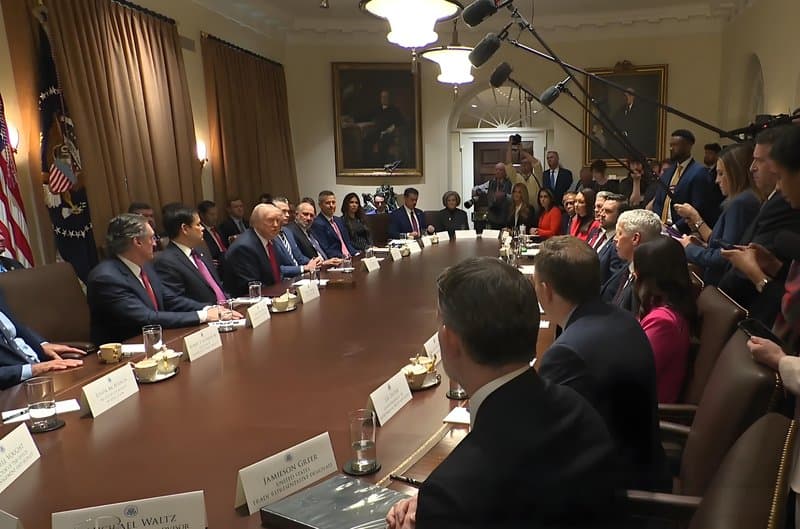
Democrats are directing their criticism towards the White House, calling for President Trump to personally mediate. Democratic leaders Chuck Schumer and House leader Hakeem Jeffries are urging the president to get directly involved in negotiations to prevent the public sector from falling into a prolonged shutdown.
When asked by the media, Thune responded: "The president will eventually speak with them, but only after the government is reopened." This statement was viewed as a signal of the Republicans' refusal to compromise.
Shutdown Impact Expands, Public Discontent Rises
As the shutdown continues, the discontent among government employees grows. About 800,000 civil servants are directly affected, with some required to continue working without being paid. Public services like national parks, scientific research institutions, and visa and passport processing are also facing delays due to staff shortages.
Economists warn that if the shutdown extends, it may impact consumer spending and confidence indices, undermining economic growth expectations. Polls show that most Americans believe both parties are responsible for the shutdown, but public trust in Congress is waning.
Political Stalemate Tests Governance Capacity
The current shutdown crisis once again highlights the operational difficulties within the U.S. political system. Although all parties claim to be willing to resolve the issue through dialogue, the space for compromise is shrinking against the backdrop of upcoming elections and increased partisan pressure.
Analysts believe that without a major political shift, this shutdown could continue to set new records, symbolizing the intensifying political confrontation between the two parties in the U.S. For ordinary citizens, this political contest not only disrupts services but also tests government governance capabilities once again.






