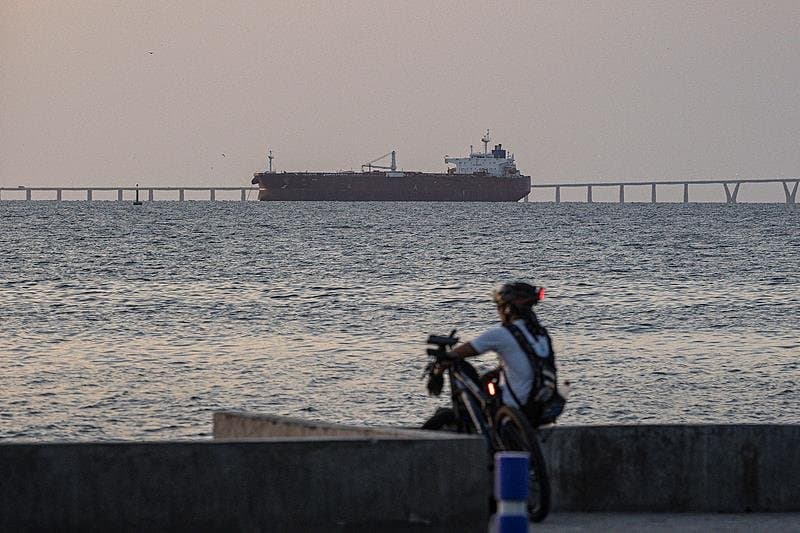
Amid persistent restrictions on external transport channels, Venezuela's crude oil industry is facing new reality challenges. As the pace of crude oil exports slows, the available space in the country's main storage facilities is rapidly decreasing, with signs of pressure on the energy system becoming increasingly apparent.
Limited Tankers Impact Export Rhythm
Recently, Venezuela's crude oil transport chain has encountered new uncertainties. Several tankers used for exports are restricted, with some being unable to complete their loading tasks as planned, directly slowing down the departure speed of crude oil. At the same time, the tightening international shipping environment makes it difficult for alternative transport solutions to be implemented rapidly in the short term.
Market participants point out that tanker obstructions not only affect immediate export revenue but also constrain Venezuela's overall energy dispatching capabilities. Once crude oil cannot be transported in time, the pressure quickly transfers to the onshore storage system.
Storage Facilities Nearing Saturation Warning Line
As export channels narrow, storage levels at Venezuela's main crude oil tanks and docked tankers are continuously rising. Industry estimates suggest that without significant changes in current production and transport rhythms, key storage points may reach their capacity limits shortly.
Once storage space is exhausted, crude oil production will lose its buffer zone, a particularly tricky situation in a system highly dependent on continuous extraction of heavy oil. The rapid accumulation of storage pressure is becoming one of the most pressing issues in the current oil industry.
National Oil Company Faces Passive Choices
As the main production entity, Venezuela's national oil company is caught in a dilemma. On one hand, maintaining production helps ensure fiscal revenue and employment; on the other hand, without matching transportation and storage capacity, continued production leads to higher operational risks.
Informed sources reveal that if the current situation persists, some oil fields may be forced to temporarily halt or reduce production to avoid systemic congestion. These passive adjustments not only affect short-term output but could also have adverse effects on oilfield equipment and long-term productive capacity.
Potential Impact on Global Crude Oil Market
Although Venezuela's crude oil accounts for a limited share of global supply, fluctuations in its production could still have marginal effects on the regional market. Especially against a background of tight heavy crude oil supply, any involuntary production cuts might exacerbate structural imbalances in the market.
Analysts believe that if the issue of obstructed exports is not quickly resolved, the market will re-evaluate the stability of supplies from Latin America, which could support pricing expectations for related crude oil grades.
Transport Bottlenecks Highlight Vulnerability of Energy System
This storage crisis again exposes Venezuela's energy system's heavy dependence on external transport conditions. In the absence of flexible logistics networks and adequate strategic reserves, any disturbance at the transport end can rapidly escalate into production pressure.
In the long term, the industry believes that improving storage resilience, optimizing export routes, and enhancing infrastructure are key to reducing similar risks. However, in the short term, these structural issues are difficult to resolve quickly.
Outlook Still Depends on Changes in External Environment
In the coming weeks, the trajectory of Venezuela's crude oil production will largely depend on whether transportation restrictions ease and changes in the international market environment. If export channels recover, storage pressure is expected to gradually release; otherwise, production cuts may become an unavoidable reality.
With uncertainties persisting, Venezuela's oil industry stands at a critical juncture, and its response will not only affect the domestic economy but also touch the sensitive nerve of the regional energy market.