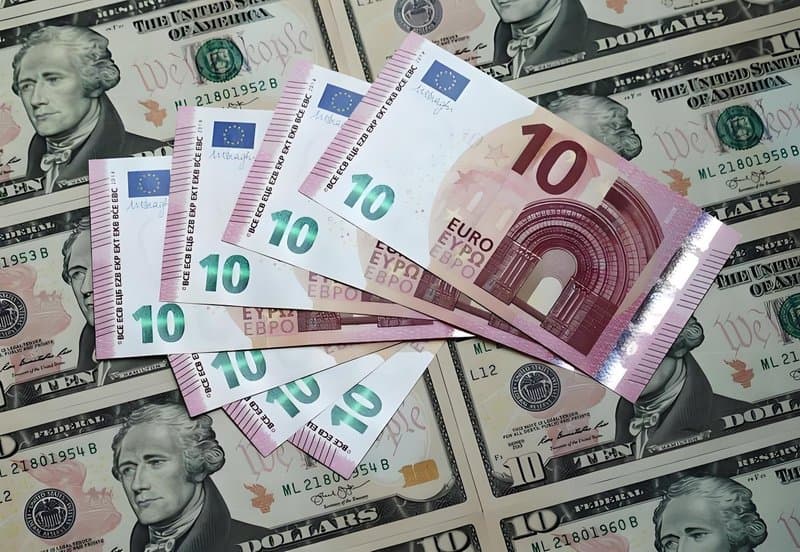
Euro Briefly Rebounds, Dollar Under Pressure
This Wednesday, the Euro regained strength against the dollar after hitting a two-week low, rebounding by nearly 0.6% during the day, and briefly returning to around 1.1638. The primary driver of this trend is the dollar's temporary pullback: the U.S. Treasury Secretary's call for an internal review of the Fed raises market concerns about central bank independence, while long-term U.S. bond yields soared to the highest since 2001, causing recession fears that pressured the dollar index.
Market insiders note that the dollar's safe-haven appeal is fluctuating amid political risks and debt outlooks, giving the Euro a chance to recover in a weak backdrop. However, whether this rebound can continue depends on the soon-to-be-released U.S. core inflation data.
Fed Independence Under Shadow
The news of Trump's dismissal of Director Cook continues to ferment in the market. Although this event won't change the Fed's policy framework in the short term, there is a widespread concern that rising political interference risks might undercut the central bank's credibility in the long run. If investors' trust in the Fed's independence further shakes, dollar assets might face more significant selling pressure.
It is noteworthy that Powell still leads monetary policy, and the market expects the Fed to maintain a “data-driven” stance before the September meeting. However, the symbolic significance of this event has deepened market sensitivity, especially regarding predictions of future monetary policy directions.
Internal Challenges for the Eurozone: Germany's Sluggish Consumption
Although the dollar's decline supports the Euro, risks from within the Eurozone also warrant caution. Recent data shows that Germany's September consumer confidence index fell to -23.6, the lowest in six months. The simultaneous decline in income expectations and economic outlook indicates households' lack of confidence in future spending capacity and employment stability.
This situation casts doubt on the prospects of Germany's economic recovery. As the core economy of the Eurozone, weak consumer demand in Germany may undermine the Euro's further rebound foundation.
Rising Political Uncertainty in France
The political situation in France also poses potential pressure on the Euro. The Prime Minister tying the budget proposal to a vote of confidence exacerbates concerns about government stability. Should the risk of early elections be priced in by the market, the Euro might face new downward pressure.
In the short term, however, the Euro shows resilience and has not experienced a significant pullback due to shifts in the French political scene, indicating that dollar factors still dominate the currency's movement for the moment.
Technical Signals and Market Outlook
From a technical perspective, the Euro is showing a "bull flag" consolidation pattern; if it breaks through the 1.1740 barrier, it could trigger a potential rise to 1.2000. However, before the rate stabilizes above key resistance, the overall outlook remains weak, with short-term support concentrated at 1.1600 and 1.1527.
Investors are now focusing on the data-heavy window in the latter half of the week. Thursday’s Eurozone economic sentiment index and the European Central Bank meeting minutes will provide clues on regional recovery; in the U.S., unemployment benefits and core PCE price index will be at the core of market pricing.
Conclusion
The Euro's current rebound relies more on the weakening of the dollar rather than improvements in its fundamentals. German consumer pressure, unstable French politics, and the Fed's independence concerns all add complex variables to exchange rate trends. The upcoming PCE inflation data may serve as a decisive blow for the short-term direction, with the market holding its breath.