• Home
  • Categories
  • News
  • Community
EN
EN
Home
CategoriesNewsGlossaryCommunity
Contact Us
Social Media
Region
🌏International
Region
🌏International
Contact
Home
/
News
/
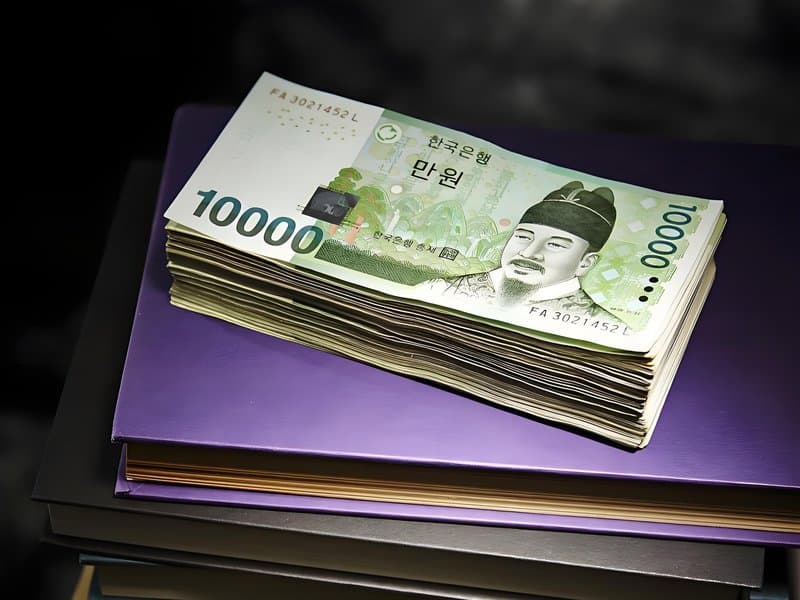
The Korean won nears record lows, fueling speculation of central bank intervention

The Korean won nears record lows, fueling speculation of central bank intervention

TraderKnowsTraderKnows
2025-11-14
Summary:The Korean won has fallen to its lowest level since the financial crisis, and the market is watching whether the Bank of Korea will intervene to alleviate capital outflows and economic weakness.

2025.4.9   韓元

The South Korean Won Under Pressure Again, Reaches a Fifteen-Year Low

Recently, the South Korean won has been weakening against the US dollar, nearing its lowest level since the 2008 global financial crisis. This has heightened market attention on the possibility of foreign exchange intervention by South Korea's central bank. Data shows the won briefly dropped to around 1480 against the dollar, just a step away from its historic low. Although there was a slight rebound in early Asian trading, the overall trend remains weak.

Since the second half of 2024, the won has depreciated by about 6%, making it one of the worst-performing major currencies in the Asia-Pacific region. Analysts point out that the weakness of the won is not a short-term phenomenon but a result of sustained capital outflows, a narrowing trade surplus, and investors' dim expectations for Korea’s economic growth.

The Clash Between Foreign Capital Withdrawal and Reform Expectations

The decline of the won is closely linked to structural changes in South Korea's capital markets. This year, foreign investors have been consistently reducing their holdings of South Korean stocks. According to the Korea Exchange, the net selling by foreigners in October exceeded $5 billion, marking a six-month high.

Additionally, at the end of September, the Korean government announced plans to allow 24-hour trading of the won and relax restrictions on non-resident transactions from next year. While the policy intends to enhance the won's internationalization and attract foreign investment, it has, in the short term, raised concerns about liquidity and market volatility.

A Seoul-based foreign exchange analyst noted, "The depth of Korea's market is not yet sufficient to support full liberalization. The short-term hesitation or withdrawal of foreign capital is a preemptive response to potential volatility risks."

South Korea's Central Bank Takes Cautious Stance, Intervention Signals Unclear

Facing the accelerated decline in exchange rates, Bank of Korea Governor Lee Chang-yong mentioned that the central bank might intervene if the market experiences "excessive volatility." However, he also emphasized that the current trend of the won primarily reflects rising global uncertainties and the impact of US Federal Reserve policies, cautioning against exaggerating its crisis nature.

Industry insiders believe that behind the central bank's cautious stance is a complex policy balance: on one hand, a depreciating won benefits export companies; on the other, inflation pressure and capital outflow risks may intensify with declining exchange rates.

Unlike Japan's frequent verbal interventions with the yen, the Korean central bank prefers using "implicit tools" to stabilize the foreign exchange market, including guiding state-owned institutions to intervene or adjusting foreign exchange positions. At the end of last year, the Korean National Pension Service (NPS) sold dollar assets and increased domestic equity investments to cushion the downward pressure on exchange rates.

Macroeconomic Challenges Constrain Policy Maneuverability

The International Monetary Fund (IMF) forecasts that South Korea's economic growth rate in 2025 will be only 0.9%, the lowest among major Asian economies. The weak growth outlook limits the scope for rate cuts, while high bond yields further tighten liquidity.

This week, South Korea's 10-year government bond yield rose to a 16-month high, reflecting market sentiment that the monetary easing cycle may be nearing its end. If the central bank intervenes too early or cuts rates, it could trigger an acceleration of capital outflows, exacerbating financial market instability.

Therefore, some market observers believe Korean authorities may adopt a "gradual defense" strategy—adjusting foreign exchange positions through state funds and strengthening cross-border capital controls, rather than direct intervention.

Regional Effects and Future Outlook

The weakness of the won is not just an issue for Korea itself but a microcosm of broader pressure facing Asian currencies with the strengthening dollar. The Japanese yen has fallen below the 155 mark, and both the Indian rupee and Philippine peso linger around multi-year lows. The increased interlinking of regional currencies means that if the Korean market experiences severe fluctuations, it could trigger a chain reaction in the Asian financial sector.

Currently, the market generally expects that if the won falls below the psychological threshold of 1500, the Bank of Korea will have to take substantial action. In the coming weeks, foreign capital flows, US inflation data, and changes in the Federal Reserve's rate cut expectations will all be key variables affecting the won's fate.

As one Korean economist put it, "The pressure on the won comes not only from the external strength of the dollar but also from internal confidence wavering—and confidence is the most challenging aspect for the central bank to directly influence."


Business Cooperation Telegram Eng

Business Cooperation Skype ENG

Risk Warning and Disclaimer

The market carries risks, and investment should be cautious. This article does not constitute personal investment advice and has not taken into account individual users' specific investment goals, financial situations, or needs. Users should consider whether any opinions, viewpoints, or conclusions in this article are suitable for their particular circumstances. Investing based on this is at one's own responsibility.

The End
Previous
Next

Comments

0/1000

You Missed

Why are fewer and fewer people trading? Perhaps this article can provide you with the answer.

Why are fewer and fewer people trading? Perhaps this article can provide you with the answer.

According to data provided by brokers, 40% of traders give up trading after one month, and only 7% remain active after five years.

亚伦_TK_LOXmv
亚伦_TK_LOXmv
2024-06-04
Investment
Investment
2024-06-04
U.S. elections and Middle East conflict boost uncertainty, driving gold prices higher.

U.S. elections and Middle East conflict boost uncertainty, driving gold prices higher.

With the US election nearing and Middle East tensions rising, risk aversion keeps gold prices high as markets watch Fed rate decisions and US economic data.

TraderKnows
TraderKnows
2024-10-30
Foreign Exchange Trading
2024-10-30
Indonesia's central bank to continue forex intervention, rupiah to strengthen next year.

Indonesia's central bank to continue forex intervention, rupiah to strengthen next year.

Recently, the Governor of the Bank of Indonesia, Perry Warjiyo, publicly stated that they will continue to intervene in the foreign exchange market to stabilize the rupiah.

TraderKnows
TraderKnows
2024-06-05
Foreign Exchange Trading
2024-06-05
Theo Broker Review:High Risk(Suspected Fraud)

Theo Broker Review:High Risk(Suspected Fraud)

Theo (Theo Technology Co., Ltd) is an online forex trading platform. This article evaluates Theo from perspectives like corporate entity, domain registration, regulatory licenses, staff, software, and trade types.

TraderKnows
TraderKnows
2024-05-14
Pig Butchering Scam
Pig Butchering Scam
2024-05-14
Is Opixtech a legitimate forex company? Are the high returns of Opix Algo real?

Is Opixtech a legitimate forex company? Are the high returns of Opix Algo real?

No matter how well Opixtech and Chen De disguise their forex funding scheme, they can't conceal its true nature as a Ponzi scheme.

TraderKnows
TraderKnows
2024-05-10
Ponzi Scheme
Ponzi Scheme
2024-05-10

Recent Post

Trump Invokes Defense Production Act with 850 Million USD for Coal Power to Meet AI Demand

06-05

NY Fed Index Shows High Supply Chain Pressures as Geopolitical Conflicts Raise Global Inflation Con…

06-05

Japan's Real Wages Rise for Fourth Consecutive Month, Fueling June BOJ Rate Hike Bets

06-05

China Flexible Employment Exceeds 300 Million as Blue-Collar Wage Growth Outpaces White-Collar for…

06-05

South Korean Stocks Post Steepest Weekly Drop Since March as Tech Valuations Reset

06-05

China Commercial Paper Rates Drop in Early June Amid Rising Bank Demand

06-05

UK House Prices Unexpectedly Fall in May as Geopolitical Tensions Push Up Borrowing Costs

06-05

Massive Intervention Fails to Save Yen as Short Positions Surge Near Historic Lows

06-05

AI Momentum Pauses as Broadcom Outlook Misses High Expectations; Markets Await Payrolls

06-05

SpaceX Launches 75B USD IPO Roadshow as Access Blocked in Mainland China and Hong Kong

06-05

Global Gold ETFs See $2 Billion Outflows in May as Capital Pivots to Tech Assets

06-05

Nikkei Drops Over 1% on Tech Sector Pullback While Real Wage Growth Provides Support

06-05

South Korea Lifts Mandatory Reporting for Crypto Transfers Over 10M Won

06-05

Amundi Says Asian AI Stocks Supported by Fundamentals as Fed Path Poses Key Risk

06-05

Taiwan Stocks Close 1.33% Lower on Broadcom Drop But Hold Key Technical Support

06-05

You Missed

Why are fewer and fewer people trading? Perhaps this article can provide you with the answer.

Why are fewer and fewer people trading? Perhaps this article can provide you with the answer.

According to data provided by brokers, 40% of traders give up trading after one month, and only 7% remain active after five years.

亚伦_TK_LOXmv
亚伦_TK_LOXmv
2024-06-04
Investment
Investment
2024-06-04
U.S. elections and Middle East conflict boost uncertainty, driving gold prices higher.

U.S. elections and Middle East conflict boost uncertainty, driving gold prices higher.

With the US election nearing and Middle East tensions rising, risk aversion keeps gold prices high as markets watch Fed rate decisions and US economic data.

TraderKnows
TraderKnows
2024-10-30
Foreign Exchange Trading
2024-10-30
Indonesia's central bank to continue forex intervention, rupiah to strengthen next year.

Indonesia's central bank to continue forex intervention, rupiah to strengthen next year.

Recently, the Governor of the Bank of Indonesia, Perry Warjiyo, publicly stated that they will continue to intervene in the foreign exchange market to stabilize the rupiah.

TraderKnows
TraderKnows
2024-06-05
Foreign Exchange Trading
2024-06-05
Theo Broker Review:High Risk(Suspected Fraud)

Theo Broker Review:High Risk(Suspected Fraud)

Theo (Theo Technology Co., Ltd) is an online forex trading platform. This article evaluates Theo from perspectives like corporate entity, domain registration, regulatory licenses, staff, software, and trade types.

TraderKnows
TraderKnows
2024-05-14
Pig Butchering Scam
Pig Butchering Scam
2024-05-14
Is Opixtech a legitimate forex company? Are the high returns of Opix Algo real?

Is Opixtech a legitimate forex company? Are the high returns of Opix Algo real?

No matter how well Opixtech and Chen De disguise their forex funding scheme, they can't conceal its true nature as a Ponzi scheme.

TraderKnows
TraderKnows
2024-05-10
Ponzi Scheme
Ponzi Scheme
2024-05-10

Risk Warning

TraderKnows is a financial media platform, with information displayed coming from public networks or uploaded by users. TraderKnows does not endorse any trading platform or variety. We bear no responsibility for any trading disputes or losses arising from the use of this information. Please be aware that displayed information may be delayed, and users should independently verify it to ensure its accuracy.




