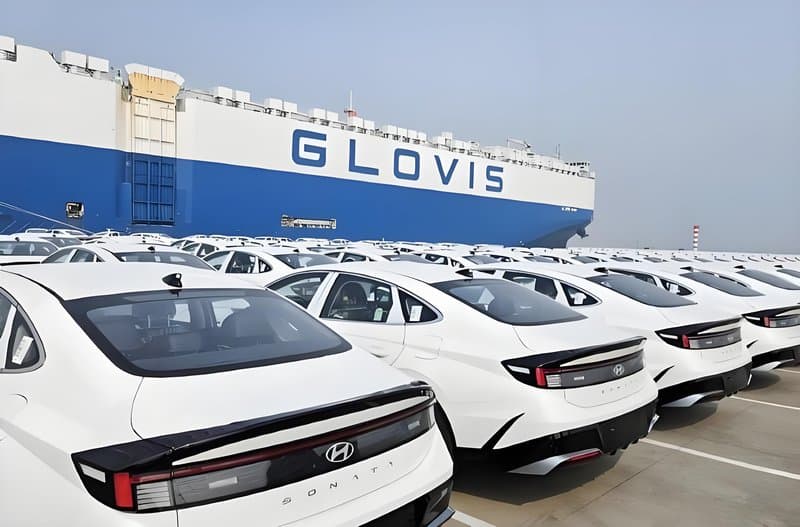
South Korea Announces Comprehensive Support Plan for the Automotive Industry
On Friday, the South Korean government announced a support plan exceeding 15 trillion won (approximately 10.2 billion USD) to help automotive and parts manufacturers mitigate the impact of tariff adjustments and global trade uncertainties. This plan follows a new automotive trade agreement concluded between South Korea and the United States at the end of October, reducing tariffs on Korean exported cars to 15%.
Despite the tariff reduction, the South Korean government is concerned that export competitiveness will still face pressure. The Prime Minister's Office stated: "Even if tariffs decrease, rising costs and weak external demand may still undermine the momentum for manufacturing recovery."
Concurrent Multi-Level Financial and Tax Support
According to the government's announced plan, South Korea will inject liquidity into the automotive industry through multiple policy tools. Firstly, the government will establish new loan programs focusing on core parts manufacturers and small-to-medium supply chain enterprises. Loan amounts will be distributed based on company size and export orders to ensure stable operations along the industry chain.
Secondly, the Ministry of Finance will implement temporary tariff quotas on key raw materials necessary for automobile production to alleviate cost pressures on importing steel, electronic components, and rare metals. This measure is expected to cover at least 40 categories of industrial materials, initially for a one-year term, adjustable based on international price fluctuations.
Emphasis on Electric Vehicle Subsidies and Green Transition
In addition to supporting the traditional automotive industry, the South Korean government plans to increase its financial contributions to new energy vehicles. The electric vehicle subsidy plan will increase from the originally planned 7.15 trillion won to 9.36 trillion won, a rise of over 30%. This funding will be used to encourage domestic consumers to purchase electric and plug-in hybrid vehicles and to support local governments in expanding charging infrastructure.
Simultaneously, the Ministry of Land, Infrastructure, and Transport will launch a new financing project providing low-interest loans for transportation companies purchasing electric and hydrogen fuel buses. This project aims to accelerate the decarbonization transition of the public transportation system, targeting 30% electrification of the national bus fleet by 2027.
Promoting Technological Investment and International Expansion
To strengthen industry competitiveness, the South Korean government will establish a 50 billion won specialized fund to support research and development of next-generation automotive core technologies. Key focus areas include autonomous driving systems, battery recycling technology, and the commercialization of hydrogen fuel engines.
Additionally, the fund will offer financial support to auto manufacturers to explore new markets in Southeast Asia, the Middle East, and Europe. The Prime Minister's Office indicated that this move aims to help domestic companies cope with external pressures arising from increasing global protectionism, fostering "strategic overseas expansion."
Government and Industry Collaborate to Meet External Risks
South Korean analysts believe this support plan serves not just as an emergency short-term measure but as a structural initiative by the government to stabilize manufacturing and drive industry transformation. A senior advisor from the Ministry of Trade, Industry, and Energy remarked: "The Korean automotive industry is at a critical juncture transitioning from conventional fuel cars to new energy vehicles; this policy package is both a safeguard and an accelerator."
Currently, the South Korean automotive industry contributes nearly 13% to the nation's total export revenue and employs over 400,000 people. Industry insiders widely agree that if the policy is successfully implemented, it will provide stable growth momentum within the next two years and help mitigate the impacts of global tariff adjustments, rising raw material prices, and declining external demand.
This series of measures indicates that the South Korean government is establishing a more forward-looking policy framework to build a "buffer" for the domestic manufacturing sector, preserving the resilience of its export-oriented economy amid global trade restructuring.