
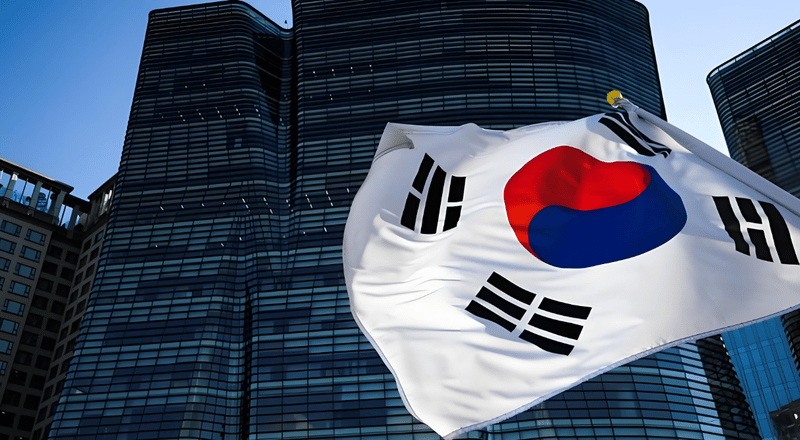
Growth Forecast Lower Than Expected
In its latest assessment, the International Monetary Fund (IMF) has made a cautious judgment on South Korea's economic outlook. The organization predicts that South Korea's economic growth rate will only be 0.9% in 2025 and is expected to recover to 1.8% in 2026. This forecast indicates that under the dual impact of global uncertainty and domestic challenges, South Korea's economic recovery will be relatively slow.
Combined Internal and External Pressure
The IMF pointed out that the uncertainty of global trade policies and long-term domestic political instability have been a drag on South Korea’s future growth. On the external export front, although demand for the semiconductor industry remains strong, the performance of other export categories is poor, contributing little to overall exports. Meanwhile, although fiscal and monetary policies have been relaxed, they cannot completely offset structural contradictions.
Consumer Recovery Remains Insufficient
Rahul Anand, head of the IMF Korea delegation, stated that to achieve more sustainable growth, South Korea urgently needs to stimulate domestic consumption. In recent years, household spending has been constrained by high prices and pressure in the real estate market, resulting in insufficient contribution from private consumption. The report calls on South Korea to improve job quality and increase disposable income, thus raising the proportion of consumption in economic growth.
Reform Agenda Highlighted
In addition to consumption, the IMF also emphasized the importance of structural reforms. South Korea needs to further optimize the labor market, increase labor force participation, and improve the competitive environment for small and medium-sized enterprises. At the same time, amid the accelerated trend of aging, the sustainability reform of the pension and healthcare systems is also listed as a priority task. These measures are regarded as core elements for long-term enhancement of potential growth rates.
Moderate Inflation Expectations
Regarding price levels, the IMF expects South Korea's inflation rate to remain around 2% next year, in line with the target range set by the central bank. This implies that, in the short term, price pressure will not be the main obstacle for policy-making. Relatively moderate inflation provides room for policy flexibility, but excessive reliance on easing measures may undermine fiscal stability.
Global Environment and Policy Coordination
As major economies gradually shift to more cautious monetary policies, South Korea also faces additional challenges in capital flows and exchange rate stability. The IMF suggests that South Korean authorities should strengthen communication with international markets to ensure policy transparency and, if necessary, flexibly use foreign exchange reserves and liquidity tools to guard against sudden shocks.
Recovery Takes Multidimensional Effort
Overall, although the IMF’s judgment on the South Korean economy is not pessimistic, it emphasizes that the recovery process will be slow and dependent on multiple factors. In the coming years, if consumption can be successfully boosted, structural reforms implemented, and policy coordination maintained, South Korea is expected to gradually break free from growth fatigue. Otherwise, low-speed expansion may become the norm.









