
Trade Agreements and Tariff Landscape
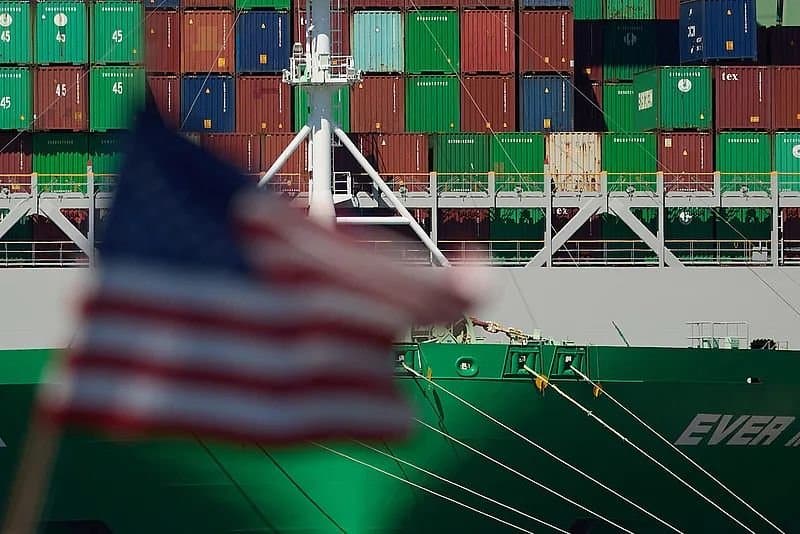
In 2025, the United States continues to elevate trade barriers. Although partial arrangements have been negotiated with seven countries and regions, including the United Kingdom, Vietnam, Japan, South Korea, and the European Union, actual tariff levels remain high. Data shows that the average U.S. import tariff has risen from 2.5% two years ago to nearly 20%. The UK enjoys discounts on certain products, while the EU gains negotiation leverage due to its larger export share.
The differentiated arrangements for tariffs on steel, aluminum, and automobiles highlight America's strategic layering. Despite exemptions or quotas in some industries, the overall pattern points to the normalization of high tariffs. This trend not only disrupts supply chains but also increases strategic uncertainty for global businesses.
Weakening Driving Forces of U.S. Economic Growth
The U.S. economy showed some resilience in the first half of the year, but momentum quickly cooled entering the summer. Fluctuations in GDP data obscure the fact that domestic demand is slowing: consumer spending has slowed to about 1%, and job growth has significantly decelerated. Excluding the strong investment contributions from artificial intelligence and high-tech projects, core private consumption and investment are almost stagnant.
Analysts believe that in the coming quarters, the U.S. economy will rely more on policy stimuli and tech investments for support, but overall growth may fall below trend levels. For the entire year of 2025, economic growth is anticipated to be around 1.7%, markedly lower than the 2.8% in 2024.
Consumer Spending Under Pressure
American households are feeling the squeeze from multiple sides. High tariffs push up the prices of goods, combined with a cooling job market and high credit costs, leading to a noticeable contraction in discretionary spending. Purchases of furniture, entertainment products, and similar categories are declining, and household budgets are tightening.
The transmission of tariff costs to the consumption side is expected to increase household living costs by nearly $2,000 annually, equivalent to a 1% GDP impact. The resumption of student loan repayment, high mortgage rates, and slowed population growth further weaken the consumer outlook.
Inflation and Tariff Transmission
Although the impact of tariffs on inflation is still in its early stages, signs of a rebound in core goods prices are already emerging. Excluding automobiles, the annualized increase in goods prices over the past three months is approaching 4%, indicating that underlying price pressures are accumulating.
In the coming months, as the tariff exemption period for goods in transit ends, coupled with rising car prices, inflationary pressures may intensify further. Even if service inflation can partially offset the rise in goods prices, the overall downward trend faces challenges.
Federal Reserve Policy and Yield Trends
Between economic slowdown and inflation resilience, the Fed's policy outlook is becoming increasingly complex. Analysts predict that the Fed will gradually cut interest rates in several upcoming meetings to guide rates back to neutral levels. However, the uncertainty in prices brought by tariffs and the expanding fiscal deficit suggest that long-term bond yields may still face upward risks.
Changes in term premiums indicate that geopolitical and fiscal factors are becoming the primary considerations for markets. Although the Treasury Department has temporarily alleviated long-end pressures through issuance structure optimization, the Treasury market may come under renewed pressure if inflation resurfaces.
Real Estate Market Predicament
The high-interest rate environment has brought the U.S. real estate market close to a "quasi-recession" state. Home sales are at low levels, and purchasing power is limited. Although recent inventories have somewhat recovered, they are insufficient to bring about significant price adjustments. Home price growth has fallen to its lowest level in over a decade, but it is still challenging to stimulate transactions.
In the future, if the Fed gradually lowers interest rates, a drop in mortgage rates will provide some respite for the real estate market. However, from a trend perspective, a full recovery may not be realized until 2026.
Conclusion
The U.S. tariff war has not only altered the global trade landscape but is profoundly affecting domestic and international economies through consumption, investment, and inflation pathways. Six major issues reveal one core conclusion: high tariffs and policy uncertainty will become the normative conditions for the coming years, making it difficult to avoid the risk of a global economic slowdown. The way the Federal Reserve and governments worldwide balance inflation, employment, and growth in this environment will determine the long-term direction of global markets.









