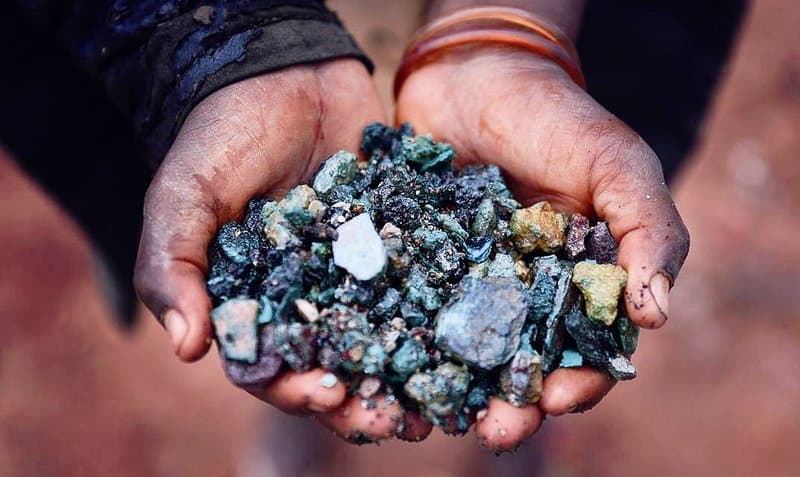
Cobalt Returns to Strategic Resource List
The U.S. Department of Defense recently announced plans to purchase up to $500 million worth of cobalt to establish a new strategic reserve over the next five years. This marks the first time in over thirty years since the end of the Cold War that the United States has re-entered the cobalt market from a buyer's perspective. This move signifies a significant shift in Washington's policy on critical resources.
In recent decades, the U.S. government has reduced strategic metal reserves, especially cobalt accumulated during the Cold War, by continuously selling off inventories. However, with the expansion of the new energy battery industry and increased military usage, the importance of cobalt has resurfaced. The reopening of procurement is both a consideration for military security and a defensive stance under geopolitical and supply chain risks.
The Dual Value of Critical Metals
Cobalt holds dual strategic value in the transition to new energy and the defense industry. On one hand, it is a core raw material for electric vehicle batteries and energy storage systems. On the other hand, cobalt-based alloys are widely used in jet engines, military ammunition, and critical aircraft components. The U.S. defense system heavily depends on it, while the supply chain has long been controlled by a few countries.
Particularly in aircraft manufacturing, cobalt magnets and alloys are nearly irreplaceable. Without a stable supply, the production of U.S. aerospace and military equipment would be severely constrained. Therefore, this round of procurement is not just an economic action but a part of the national security strategy.
Global Cobalt Supply Chain Concerns
The global cobalt market is highly concentrated, with the Democratic Republic of Congo contributing over 70% of production. In recent years, Congo has implemented export restrictions, leading to new highs in cobalt prices. The procurement demand from the U.S. Department of Defense is bound to further heighten market tension.
Meanwhile, China dominates cobalt mining and refining, which poses a potential reliance issue for the U.S. in key mineral supplies. Restarting strategic reserves is a preemptive measure Washington is taking to weaken this vulnerability.
Pentagon's Policy Shift
Since the 1990s, the U.S. Defense Logistics Agency has focused on reducing inventories by gradually selling off cobalt and other strategic metals accumulated during the Cold War. Now, this trend has completely reversed. The procurement action sends a clear signal: in the face of technological competition and geopolitical risks, the U.S. must reassess its critical metal security system.
Industry insiders point out that this is not merely a restocking of a single mineral, but a systematic adjustment of the U.S. strategic reserve system. In the future, cobalt, along with materials like rare earth elements and lithium, may become a focal point for monitoring and reserve by the Department of Defense.
Market and Industry Impact
The procurement plan will undoubtedly be a significant boost for the global cobalt market. International suppliers will see a new growth point in demand, and price volatility could increase further. Analysts believe that the U.S. policy shift will prompt more Western countries to follow suit, fostering the establishment of regional strategic metal alliances to reduce reliance on a single source.
For the new energy industry, the U.S. government's entry could signal an intensified competition for resources with the military sector. Electric vehicle manufacturers, energy companies, and battery manufacturers may face higher raw material costs.
Conclusion
The U.S. Department of Defense's $500 million cobalt procurement highlights the increasingly fierce global resource competition. As a key metal linking new energy and defense industries, cobalt is once again placed at a strategic height. This move reflects national security needs and will profoundly impact the global cobalt supply chain and pricing landscape. In the coming years, market volatility in cobalt may become a crucial point of observation in international economics and geopolitics.