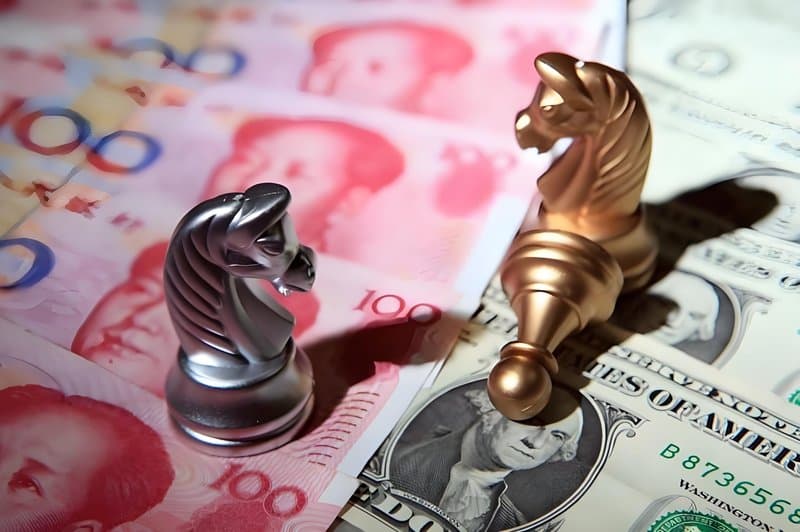
RMB Breaks Year High, Market Reevaluates Exchange Rate Trend
Recently, amidst sustained pressure on the U.S. dollar, the RMB has strengthened its exchange rate, pushing several dollar exchange rate indicators to refresh their year highs, drawing widespread market attention to the future movement of the RMB. Given the short-term lack of a clear rebound force for the U.S. dollar index, the RMB is gaining more fluctuation room under a stable and slightly rising trend. Market participants pointed out that the recent strong performance of the RMB is mainly driven by the decline of the U.S. dollar and improved domestic capital demand.
Meanwhile, although the central parity exchange rate of the RMB against the U.S. dollar continues to show an upward trend, the pace of appreciation appears slightly moderated compared to earlier periods. This indicates that the regulators continue to adopt a moderate strategy to maintain steady expectations, avoiding excessive market reactions triggered by short-term unilateral movements.
Weakened Dollar Momentum Creates Opportunity Window for RMB
In the global foreign exchange environment, the delayed release of U.S. data and fluctuating policy expectations have put sustained pressure on the dollar recently. As investors become more cautious about the future path of interest rates, the dollar index is exploring downward amid turbulence, providing a period of support for emerging market currencies, including the RMB.
Market observers noted that signs of structural slowdown in the U.S. employment market are receiving more attention. As investors reassess economic resilience, the appeal of the dollar has somewhat declined. Additionally, some institutions believe that the expectation of the U.S. monetary policy entering an easing cycle is strengthening, making it difficult for the dollar to gain sustained upward momentum for some time.
Although the Federal Reserve has recently released a neutral policy signal, this has not significantly altered the weak pattern of the dollar. Fund managers generally believe that while the dollar's safe-haven attribute still holds influence, its short-term trend is more dictated by data and interest rate pricing, which currently do not wholly favor a dollar rebound.
The Logic of Strong RMB Continues, but Fluctuations May Intensify
As the trend of overseas economic recovery becomes clearer, the expectation of RMB appreciation has strengthened, coupled with an increase in traditional year-end settlement demands, giving the RMB relative advantages in the short term. The liquidity in the foreign exchange market improves with seasonal factors, prompting some enterprises to conduct early exchange rate locking operations, further supporting the RMB's performance.
However, the pace of RMB central parity’s upward adjustment is slowing, reflecting the policy level's cautious attitude toward the pace of appreciation. Industry analysis suggests that as the exchange rate approaches the year high, regulatory authorities will maintain moderate flexibility in guiding expectations to avoid the formation of unilateral market trends. In the future, the RMB trend may show more moderate fluctuations on a relatively strong basis.
Policy Orientation Provides Clear Signals for Exchange Rate Stability
In its latest quarterly report, the People's Bank of China emphasized continuing to advance moderately loose monetary policy to maintain reasonably ample financial conditions. It also proposed to prevent exchange rate over-adjustment risks, maintaining the RMB's stable operation at a reasonable and balanced level. This provides significant guidance for the market, helping enhance confidence in the RMB exchange rate.
The reported measures on expanding cross-border use of RMB and improving macro-prudential management are also seen as medium- to long-term arrangements to enhance exchange rate flexibility and stability. Against the backdrop of continuous improvement in the policy framework, the RMB exchange rate is considered to be within the central bank's acceptable range, with future policy adjustments expected to be flexibly adapted to market changes.
Outlook for the Next Stage Amid Multiple Factors
Considering the U.S. dollar trend, central parity management approach, and policy guidance, the market generally believes that the RMB has the conditions to remain steadily strong in the short term. However, as overseas data becomes available more frequently, dollar fluctuations may intensify again, and the RMB is expected to exhibit more frequent technical adjustments accordingly.
Analysts predict that if the dollar continues to remain weak, the RMB is likely to maintain resilience near its current level; however, if the external environment shifts abruptly, policy measures will be rapidly implemented to smooth volatility and ensure the exchange rate does not undergo unexpected unilateral changes.