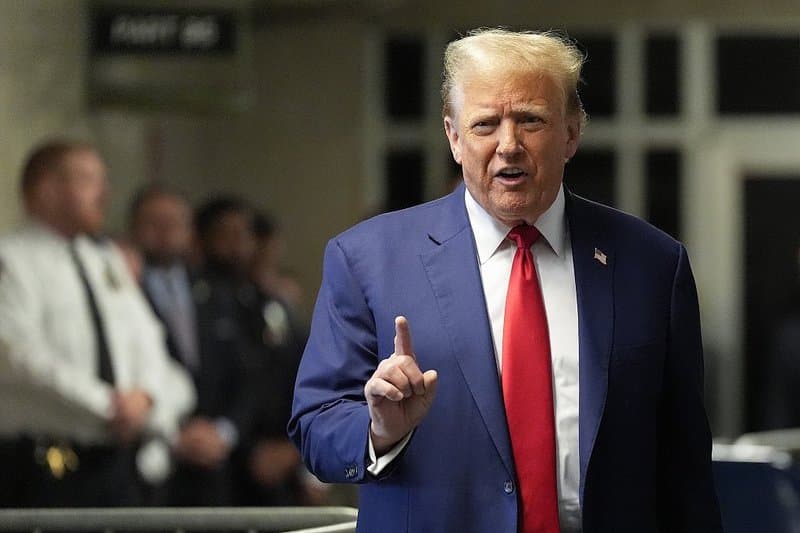
Entry Ban Upgraded Again
U.S. President Trump announced an expansion of the list of countries from which entry is banned or restricted, further tightening an already stringent immigration policy. The White House stated that this move is based on considerations of national and public safety, reinforcing immigration review systems following recent security incidents.
The latest measures expand the scope of countries and regions under the existing ban framework, significantly increasing the coverage of full or partial entry restrictions. The White House emphasized that these adjustments are not a temporary reaction but part of a systematic immigration security assessment aimed at reducing potential risks and enhancing border and visa management.
New Countries and Adjustment Directions
According to the government's explanation, the new measures impose comprehensive entry restrictions on some countries, while others fall under stricter partial restrictions. Meanwhile, in countries already facing partial bans, some restrictions have been escalated to total bans.
The White House also made relatively lenient adjustments for certain countries, relaxing restrictions on specific types of visas to reflect progress in cooperation with U.S. immigration and security communication. This differentiated approach shows that the policy is not one-size-fits-all but tied to bilateral interactions and implementation outcomes.
Policy Background and Safety Considerations
The direct context for the expansion of the ban is recent severe security incidents in the U.S. involving individuals with immigrant status. The Trump administration believes that existing immigration screening mechanisms have sometimes failed to adequately identify risks, necessitating stricter admission rules to fill gaps.
White House officials pointed out that the policy's focus is not on nationality itself but on whether relevant countries meet U.S. security standards in identity verification, travel document management, and law enforcement cooperation, addressing criticisms of a generalized approach.
World Cup Factor Draws Attention
As the U.S. is set to co-host the World Cup with neighboring countries, tightened visa and entry policies have raised concerns in the sports and tourism sectors. Some nations already qualified for the tournament are among those on the new restriction list, making travel for fans, team staff, and related personnel a focal point.
In response, Trump sought to alleviate concerns, clearly stating that tournament-related personnel will not be "universally shut out." The White House announced that the U.S. is establishing a more efficient visa prioritization mechanism to ensure those with event tickets, official invitations, or certified identities can enter smoothly.
Commitment to Visa Prioritization Mechanism
The government emphasized that visa arrangements for major international events will adopt a "track-based processing" model, enhancing approval efficiency without relaxing overall safety standards. This mechanism is described as a compromise balancing security and openness, maintaining border control principles while avoiding substantial impacts on international events.
However, specific execution details are yet to be fully disclosed, and relevant countries and FIFA continue to closely watch the policy's practical viability.
Diverse Domestic and International Reactions
Within the U.S., some supporters believe the expanded ban helps restore "controllability" to the immigration system, reflecting the government's commitment to safety. However, opponents argue that frequent adjustments to the ban list may weaken the U.S.'s image as a hub for international interaction and increase diplomatic friction.
Internationally, some affected countries have expressed concerns, arguing that the policy might have ripple effects on personnel exchanges, and economic and cultural interactions.
Uncertainty in Policy Direction
Analysts believe that future entry policies may continuously exhibit "dynamic adjustment" characteristics, depending not only on security situation changes but also influenced by international politics, economics, and major event arrangements. For markets and the international community, the real key is not the list itself but whether the U.S. can maintain a stable and predictable policy framework balancing safety and openness.