
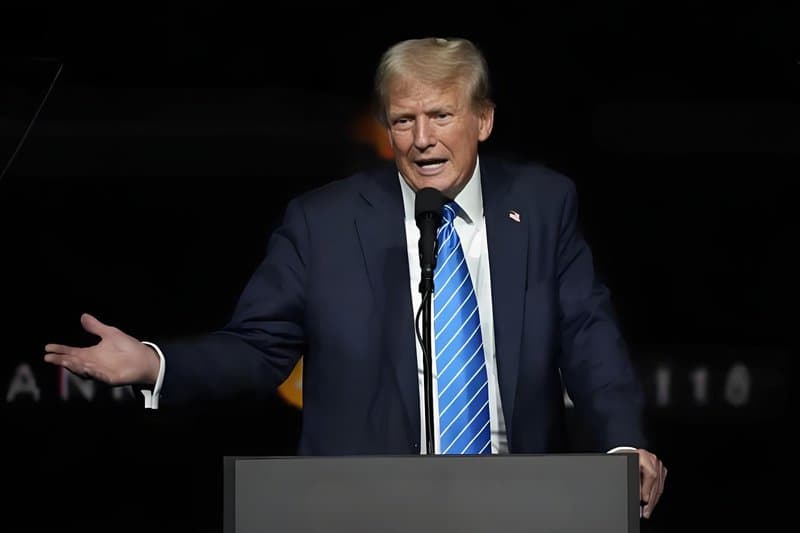
Trump Reshapes Data Ecosystem Triggering Institutional Trust Tremors
At the beginning of August 2025, a political storm in the United States stirred global financial nerves. An "abnormally weak" employment report ignited Trump's comprehensive attack on the statistical system and also unveiled the potential overhaul of the Federal Reserve.
On August 2, U.S. President Trump suddenly announced the dismissal of the Chief Economist of the Department of Labor, accusing them of "manipulating data to mislead voters." This move did not alleviate market doubts but rather increased concerns about the fairness of U.S. economic data. Trump provided no substantive evidence of data falsification but repeatedly emphasized on social platforms his intent to "reveal the true state of the economy."
Economists involved in government statistics pointed out that since the pandemic, insufficient survey samples have severely limited data accuracy. A former Department of Labor data director revealed, "The response rate to surveys we relied on has plummeted from 70% to around 40%, and nearly no responses have been received from some key sample areas."
Federal Reserve Faces Internal Battle As Structural Overhaul Looms
Almost concurrently with the Department of Labor turmoil, Federal Reserve Board member Kugler resigned on August 2, citing "personal reasons," becoming the first high-level central bank member to step down early in 2025. Although the reasons for the resignation were vague, the sensitivity of the timing raised high alerts.
Sources familiar with the White House decision-making process revealed that Trump's faction is accelerating its personnel arrangements for the Federal Reserve. A list of five "potential candidates" has been secretly submitted to the Treasury, with the first choice being Hassett, a former Chairman of the White House Council of Economic Advisers and a proponent of negative interest rates. He has publicly stated that "the Federal Reserve should not be an anti-inflationary machine but a cooperator with the President’s economic policies."
If Trump succeeds in pushing his allies into the Federal Reserve system, the internal policy balance of the Federal Reserve will be reshaped, and the independence of monetary policy will face greater challenges. Treasury Secretary Besent has recently been meeting frequently with regional Federal Reserve presidents, which is seen as "pre-calibrating" policy direction.
Global Capital Markets Unsettled, Dollar Credit System Reevaluated
The accusation of "politicized" statistical systems provoked strong reactions in global markets. On August 2, the Dow Jones index dropped over 800 points in a single day, and the yield curve for U.S. Treasury bonds inverted further, reflecting a pessimistic outlook for the future economy. The S&P 500 and Nasdaq also experienced significant declines as risk assets faced concentrated sell-offs.
Meanwhile, the dollar index experienced increased volatility, with officials from the Eurozone, the UK, and Canada central banks all expressing the need for "reasonable caution" regarding U.S. data releases. Several G7 finance departments also plan to implement "additional error correction" in models that reference U.S. economic data.
"If the White House can arbitrarily change statistical executives, will the next step be changing the GDP algorithm?" noted a UBS analysis report. U.S. economic data have shifted from a "global reference coordinate" to a "source of biased variables."
The Widening Gap Between Power and Truth
Although Trump's faction attempts to portray an image of "exposing data conspiracies," there is widespread concern in the industry that this series of actions will long-term erode the credibility of the U.S. data system. A researcher at the Roosevelt Institute wrote in a commentary, "A president may dislike the data, but they cannot arbitrarily punish the statistical process."
Currently, signs of political interference in the statistical system by American politics are becoming more apparent, which not only could affect the foundation of Federal Reserve decisions but also undermine global capital confidence in U.S. asset pricing.









