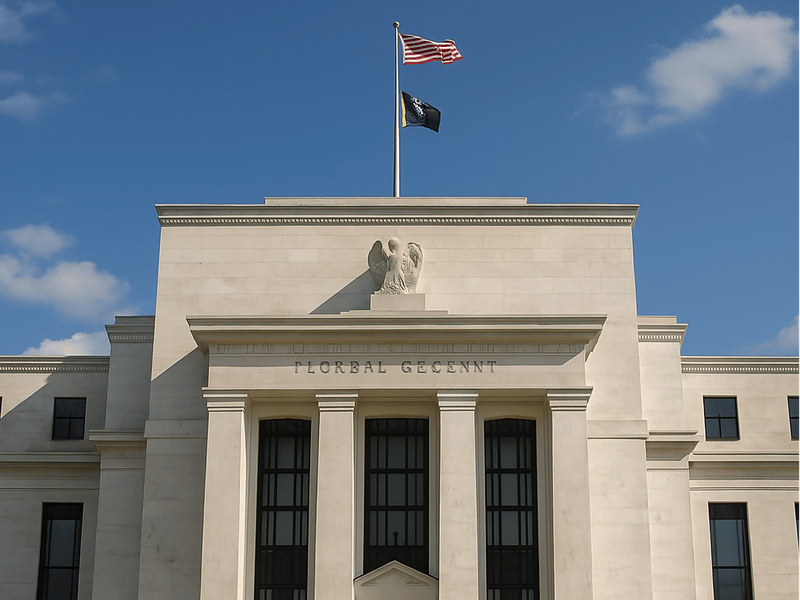
Signs of Division in Federal Reserve Policy Stance
With July's non-farm employment data falling short of expectations, a significant divide has emerged within the Federal Reserve regarding whether to maintain high interest rates. Governors Bowman and Waller uncharacteristically expressed dissatisfaction with the current monetary policy last Friday, advocating for an early start to rate cuts, citing that signals of vulnerability in the job market may have been overlooked.
This marks the first time since 1993 that two governors have openly opposed interest rate decisions. This move not only highlights a public clash over policy direction but also suggests more significant divisions may arise during the September meeting.
Governors Warn: Job Market Nearing a Critical Point
Bowman indicated that current interest rates have become an "invisible restraint" on the economy, especially amidst increasing signs of weakness in the labor market, heightening the risk of delayed adjustments. She suggested a return to "neutral rates" to avoid becoming reactive.
Waller bluntly stated, "Inflation is nearing its target, and there is no reason to wait." He warned that if the Fed continues to hesitate, it could miss the optimal window to address economic slowdowns.
Although their views differ in approach, they converge on the need for a more proactive policy shift given the current economic environment. Their stance is widely seen as an internal correction of the Fed's "delay in adjustments."
Non-Farm Data Fuels Rate Cut Expectations
Data from the U.S. Department of Labor shows that July's non-farm employment grew by only 73,000, significantly below market expectations. Simultaneously, May and June figures were substantially revised down, totaling a reduction of 258,000 jobs. The unemployment rate rose to 4.2%, indicating a clear cooling trend in the labor market.
This series of data provides concrete support for Bowman and Waller's call for rate cuts. Market pricing quickly responded, with federal funds rate futures indicating nearly a 90% probability of a rate cut in September. Investor sentiment experienced significant volatility, and bond yields fell accordingly.
Increasing Political Pressure
Around the time the economic data was released, the Trump administration's actions drew public attention. The President frequently criticized the Fed's inaction and targeted Chairman Powell, urging for "swift rate cuts."
Although the Fed has always emphasized its independence, concerns about political interference persist. Particularly with potential changes to Fed board positions, there is speculation that Trump may further intervene in appointments to steer monetary policy in his favor.
Internal Resistance: Some Officials Still Hawkish
In response to the governors' dissenting votes, Cleveland Fed President Harker spoke for the "hawkish" camp. She believes that the labor market is not yet unbalanced, and with inflation still above target levels, it is premature to speak of rate cuts. She advocates for continued observation of data over the coming months before making decisions.
Harker's remarks highlight the increasingly pronounced divisions within the Fed when facing complex economic situations, and the challenge of balancing inflation targets with economic growth.
Policy Shift May Be at a Critical Juncture
Although Fed Chair Powell maintained a "cautious observation" approach after the meeting, emphasizing policy flexibility, there is increasing demand for "forward-looking adjustments." Judging by market reactions, the September meeting is likely to be a turning point.
In the coming weeks, U.S. core inflation and August employment data will be key indicators. If the data continues to weaken, the Fed may be forced to abandon its "wait-and-see strategy" and enter an actual rate-cutting cycle.