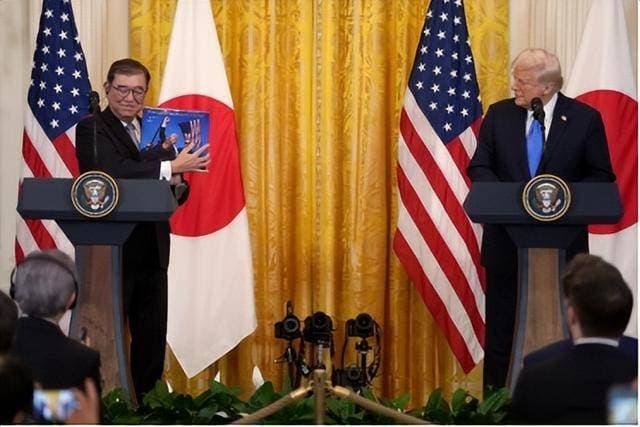
Ishiba Declares: US-Japan Agreement Has "Mutually Beneficial Nature"
In early August 2025, Japanese Prime Minister Shigeru Ishiba publicly stated in the Diet that the trade agreement reached with the United States is a "mutually beneficial and balanced" outcome for both parties. This was his first official response in the Diet to external skepticism regarding the fairness and transparency of the agreement.
Facing repeated inquiries from several lawmakers, Ishiba emphasized that long-term US-Japan trade cooperation requires building "pragmatic trust," and the agreement's signing is just the beginning; its implementation will be the real challenge. "Reaching an agreement is easy, fulfilling commitments is hard; this is not a criticism of the US, but a sober realization of reality," he said.
"No Text" Issue of Agreement Sparks Debate
Ishiba's speech not only focused on the macroeconomic aspects but also revealed technical ambiguities within the agreement itself. Japan’s chief trade negotiator Akizawa Ryo added that currently, there is no formal written text of the agreement, and the results mainly rely on verbal consensus and memoranda.
Akizawa pointed out that this "no text" approach is not uncommon in agreements between Japan, the US, the EU, and South Korea, as it is considered a "pragmatic arrangement" to flexibly address subsequent detailed negotiations. However, some lawmakers expressed concerns about whether the lack of written details could lead to ambiguities in implementation or legal disputes in the future.
To this, Akizawa stated: "We will continue to negotiate with the US to ensure all terms are implemented, while seeking to form a more operationally significant consensual document."
Divergent Reactions from Domestic Politics and Industry
Opinions in Japan are divided on this "verbal agreement." Members of the ruling coalition largely support the agreement, believing it will help stabilize exports to the US and expand market opportunities for agricultural and automotive industries. Meanwhile, opposition parties question the transparency and clarity of execution mechanisms, fearing Japan may lose negotiating leverage in future detailed agreements.
The Japan Business Federation issued a statement welcoming the government's efforts but also noted that it hopes the government "will publish the complete content of the agreement as soon as possible and strengthen communication with the industry to prevent misunderstandings or implementation delays."
US-Japan Economic Relations Enter Subtle Phase
In recent years, amid the restructuring of global supply chains and escalating geopolitical tensions, US-Japan economic interactions have involved more than just tariffs or trade deficits, delving into deeper issues such as high-tech standards, cross-border data flows, and green energy cooperation.
This negotiation method of "agreement first, text later" is also regarded by analysts as a "strategic transition," paving the way for further cooperation in fields such as new technology trade and semiconductor material division between the US and Japan. Shinchiro Murakami, Professor of International Politics at the University of Tokyo, noted: "This agreement might represent a framework rather than a final result."
Agreement Still Holds Uncertainties
Although Ishiba emphasized "mutual benefit and win-win," the non-written nature of the agreement and historical differences between the US and Japan on sensitive issues such as agriculture and intellectual property lead to a cautiously optimistic outlook on its long-term effectiveness.
Government insiders say the Ministry of Foreign Affairs and the Ministry of Economy, Trade, and Industry are drafting a supplementary memorandum, aiming to clarify specific timelines and implementation mechanisms within the next two months.