Uncertain Prospects for South Korea-U.S. Investment Agreement as Differences Widen
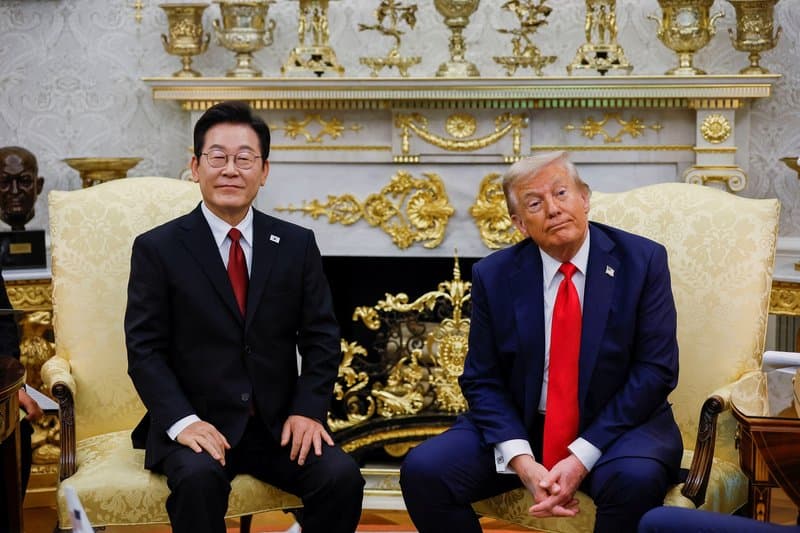
As U.S. President Donald Trump prepares to visit South Korea, the much-anticipated $350 billion investment agreement between the two nations has stalled. South Korean President Lee Jae-myung admitted in an interview that fundamental differences remain on key issues such as investment methods, fund allocation, and risk-sharing.
This investment plan was initially intended to be a core pillar in strengthening the economic partnership between South Korea and the U.S., but the current deadlock in talks raises concerns that Trump's visit, scheduled for this Wednesday, may not yield significant breakthroughs.
Lee Jae-myung, speaking from the presidential office in Seoul, stated: "Our differences with the U.S. are not limited to the amount involved but encompass the entire investment structure—who bears the risk, how profits are distributed—none of these aspects have been finalized."
Significance of the Investment Agreement and its Impact on Bilateral Supply Chain Cooperation
The $350 billion investment commitment was first proposed in July to boost cooperation between South Korea and the U.S. in crucial fields such as semiconductors, electric vehicles, and clean energy.
According to initial drafts, South Korea planned to establish production and research bases in the U.S. through corporate alliances in exchange for tariff reductions and technology-sharing mechanisms. However, as negotiations progressed, the two sides found themselves at odds over regulatory policies, tax incentives, and intellectual property rights.
Industry experts in South Korea point out that further delays in the agreement could affect the overall strategy of manufacturing in the U.S. Especially for electric vehicle and battery companies, who have postponed investment decisions due to policy uncertainties, this could place them at a disadvantage in the North American market.
A South Korean automotive industry analyst noted: "If South Korea and the U.S. fail to finalize the investment framework before Trump's visit, Korean companies could face dual pressures of rising costs and increasing market uncertainties in the coming months."
Trump's Optimism Met with Caution from South Korea
Despite Seoul's reserved stance on negotiations, Trump expressed optimism before departing for Asia.
At a White House press conference, he stated: "We are very close to reaching an agreement with South Korea, and I believe it will be a tremendous victory for both countries."
Trump emphasized that the agreement would create tens of thousands of high-paying jobs in the U.S. and reinforce the alliance between the U.S. and South Korea in high-tech manufacturing.
However, South Korean officials have privately suggested that Trump's remarks are more of a political stance rather than a reflection of actual progress. One anonymous South Korean government source commented: "The U.S. tends to view investment commitments as a political achievement, but we must ensure all terms are sustainable for Korean businesses."
Risk Sharing and Profit Distribution
According to South Korean sources, the biggest disagreements center around investment risk-sharing and profit distribution mechanisms.
The U.S. wants South Korean companies to shoulder a larger proportion of initial investment costs while the U.S. government retains some regulatory authority; South Korea insists on clearer policy support and tax incentives during the early stages of the project.
Furthermore, South Korea is concerned that any changes in U.S. policy, such as modifying tariffs or subsidy mechanisms, could prevent Korean companies from realizing expected returns on their U.S. investments.
Lee Jae-myung pointed out in the interview: "We hope to reach a fair, transparent, and long-term stable agreement, rather than a temporary arrangement subject to political cycles."
Trump's Visit to South Korea Could Be a Turning Point
Despite the deadlock, analysts generally believe Trump's visit could still serve as an opportunity to reopen dialogue.
Han Eun-ju, a professor of International Relations at Ewha Womans University in Seoul, remarked: "Trump is adept at using political pressure to achieve economic results; his visit might prompt both sides to make symbolic concessions at the last minute to ensure positive announcements during the summit."
Meanwhile, public opinion in South Korea urges the government to remain rational in negotiations and avoid sacrificing long-term interests for political considerations. A comment from Yonhap News stated: "This is not just an investment; rather, it's a negotiation about economic sovereignty and future industrial arrangements."
Agreement Signing May Be Delayed
According to multiple sources, although Trump and Lee Jae-myung plan to continue discussions during the APEC summit in Gyeongju, the final agreement may not be signed until the end of the year.
A South Korean Foreign Ministry official stated: "We will not sacrifice the quality of the agreement for political timing."
This statement indicates that both sides may continue to refine details through repeated consultations to ensure the agreement balances economic interests with political stability.
Regardless of the outcome, this negotiation has become a critical gauge of the depth of economic cooperation and strategic trust between South Korea and the U.S.