

Liberal Party Promotes Anti-Fraud Agency to Establish National Regulatory System
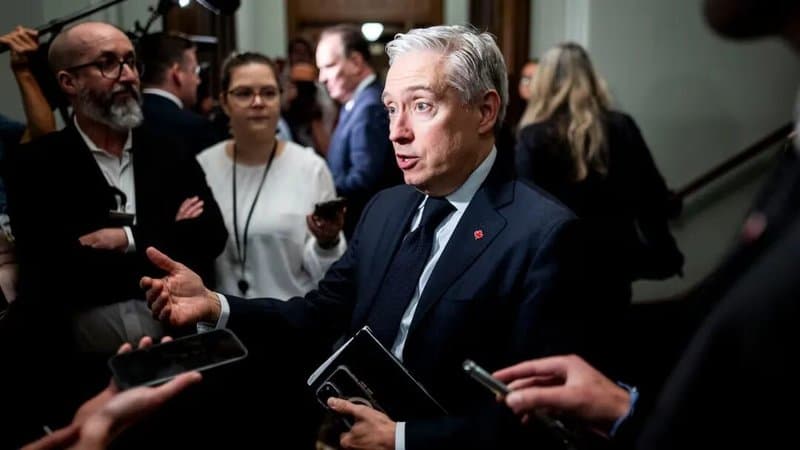
The Liberal government of Canada has announced the establishment of a national financial crimes agency in the upcoming fall budget, marking a key step forward in combating financial fraud and digital crime. In a press conference in Ottawa, Finance Minister François-Philippe Champagne stated that the agency will be the centerpiece of the national anti-fraud strategy, aiming to integrate financial regulation, enforcement, and technological investigative methods to tackle increasingly complex financial fraud.
Government data shows that Canadians lost as much as C$643 million to fraud in 2024, nearly tripling from 2020, with incidents spanning telecom scams, false investments, and cryptocurrency schemes. Champagne noted that actual losses may be far higher than reported figures because "many victims still choose not to report." He emphasized that the new agency will enhance collaboration with banks, financial institutions, and tech companies, requiring major banks to formulate fraud prevention policies and amending the Bank Act to strengthen regulatory oversight.
However, the government has yet to disclose the specific budget and operational mechanisms for the agency, stating that details will be revealed in the budget on November 4.
Political Pressure Intensifies as Budget Becomes Focal Point of Conflict
This policy announcement comes as the Liberal minority government faces a test of parliamentary confidence. With the fall budget approaching, opposition parties have been presenting their own fiscal platforms, making budget deliberation a political centerpiece.
Conservative leader Pierre Poilievre, in an open letter, urged Prime Minister Carney to produce a "responsible budget," underscoring the need to cap the fiscal deficit below C$42 billion. He advocated for tax cuts, reducing administrative costs, and repealing the carbon tax to alleviate public pressure, particularly by lowering personal income and capital gains taxes to boost household spending and investment confidence.
Meanwhile, the Bloc Québécois has presented 18 budget conditions, including increased healthcare transfer payments, expanded housing construction funds, and an additional C$814 million carbon tax rebate for Quebec. The party stressed that if these conditions are not met, they will "reassess" their position on supporting the budget.
The New Democratic Party (NDP) is exerting pressure from the social spending angle, demanding the government "significantly increase public investment" in employment, healthcare, and housing to address rising living costs and insufficient public services. Leader Jagmeet Singh stated that if the Liberals hope for the budget to pass smoothly, they must "deliver on promises to ordinary working-class Canadians, not just serve the financial system."
Anti-Fraud Policy May Become Political Consensus as Focus Shifts to Execution
Although parties have clear differences in fiscal direction, there is a broad agreement on the need to strengthen anti-fraud regulation. The Conservative spokesperson expressed support for any policy that "effectively combats financial crime and protects consumers," while the NDP called for ensuring the agency's independence and accountability, preventing political interference.
Scholars note that establishing a financial crimes agency, while strategically significant, needs clear role division and enforcement authority to be effective. Michael Holland, a political science professor at the University of Ottawa, stated, "Simply creating an agency does not automatically lower the fraud rate. The key lies in financial commitment, cross-departmental coordination, and public education."
Liberal Party Seeks Balance as Budget Faces Dual Test of Policy and Survival
Analysts believe that the Liberal government's move to establish a financial crimes agency simultaneously addresses public dissatisfaction with fraud issues and seeks to gain more political support for the budget. Since the Liberals do not hold a majority in Parliament, the approval of their budget depends on negotiations with the NDP and some independent MPs. If the budget is rejected, it could trigger a government confidence crisis.
Financial market observers point out that if the budget ultimately passes, it will signify that Canada is entering a new phase in regulatory system and fiscal discipline. Conversely, if negotiations fail, the establishment of the anti-fraud agency will be hindered, and the direction of fiscal policy will fall into deeper uncertainty.








