

Government Shutdown Continues, but Fed's Easing Pace Unchanged
The U.S. government shutdown crisis has entered its third week, with the Senate yet to pass an appropriations bill, making a short-term resolution unlikely. Multiple sectors, from air transportation to public services, have been impacted, causing a notable slowdown in economic activity. However, despite the delay in critical economic data releases, the market broadly believes this situation will not alter the Federal Reserve's upcoming policy direction.
Morgan Stanley's latest report indicates that the data delay will not disrupt the Fed's easing process. The report states: "If in September the employment and inflation outlook already prompted the Fed to restart the easing cycle, and there has been no substantial improvement since, then further rate cuts will be the natural result."
Analysts believe the major challenge facing the Fed is to "maintain decision-making coherence in the presence of incomplete information." However, with the labor market continuing to weaken and consumer confidence waning, further easing has become a market consensus.
Labor Market Slowdown as the Main Driver of Easing
Morgan Stanley emphasizes that the visible fatigue of the U.S. labor market is the core factor driving the Fed to continue its rate cut path. Since the summer, job growth has been sluggish, with average new job numbers falling below pre-pandemic levels. The report points out that this structural slowdown reflects not only a decline in corporate hiring willingness but also a waning momentum in economic recovery.
Meanwhile, signs of a slowdown in consumer spending and real estate activities have emerged. Analysts believe that Fed officials' confidence in the economic outlook is now based on an assumption of a "moderate slowdown" rather than a complete "soft landing." Federal Reserve Governor Christopher Waller recently also stated that in the absence of complete data, the central bank needs to be cautious but not "inactive."
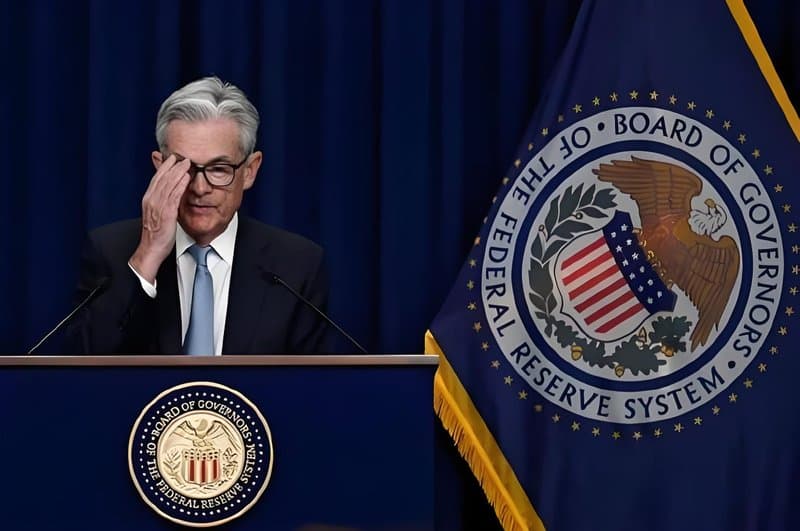
Powell's speech last week was seen as sending a dovish signal. He noted, "Since the September meeting, there has been little change in employment and inflation trends." This was interpreted by the market as an indirect confirmation of "continued rate cuts."
Near-Certain Rate Cuts, Market Bets on Year-End "Double Cuts"
According to the CME "FedWatch" tool, the probability of a 25 basis-point rate cut in October is as high as 99.4%, and the probability of a cumulative 50 basis-point cut by December also reaches 98.6%. This means the market is almost certain that the Fed will cut rates twice consecutively within the year.
Morgan Stanley’s forecast aligns with this, anticipating a rate cut each in October and December, totaling a 50 basis-point reduction for the year.
The firm also expects that by mid-2026, the federal funds rate will fall to the 2.75% to 3.0% range, suggesting the Fed may enter a "long-term neutral interest rate" phase. Analysts point out this forecast is based on two core assumptions: first, that inflation continues to fall back to target ranges; and second, that economic growth remains moderate without falling into recession.
Policy Challenges in a Data Vacuum
Despite strong easing expectations, the market remains cautious of the policy risks posed by missing data. Due to the government shutdown, the Labor Department and Statistics Bureau cannot release employment and inflation reports on time, so the Fed must rely on private institutions and regional Reserve Banks' survey data for judgment.
Morgan Stanley warns that if the shutdown persists into November, the Fed's decision-making will depend more on "unofficial information," which might undermine policy credibility and amplify market volatility.
However, the report also notes that the Fed has already "seen enough signs of economic weakness" over the summer to confirm that previous tightening policies have been excessive. In other words, even if data is temporarily interrupted, the Fed still has a reason to maintain its rate cut pace.
Restart of the Easing Cycle May Expand Global Market Chain Reactions
Analysts believe that the Fed's consecutive rate cuts will trigger a global reallocation of capital, boosting emerging market assets and gold prices, while weakening the dollar's strength. Citigroup, UBS, and several other institutions predict that another two rate cuts this year could see the dollar index fall below the 95 mark, with U.S. Treasury yields further declining.
From policy signals to market sentiment, the Fed's easing expectations are no longer about "whether to cut rates" but "how much and for how long."








