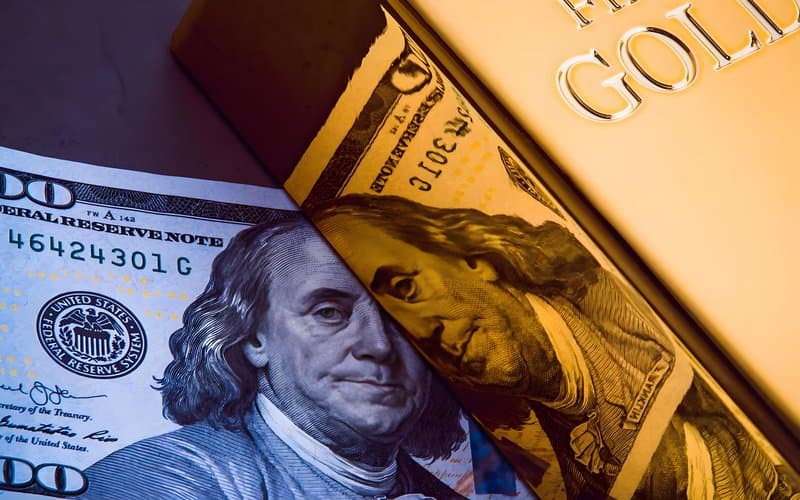
Rising Trends in Dollar Devaluation Trade: Gold and US Bonds in Tandem
Over the past year, the continuous weakening of the dollar has prompted global investors to reassess and reposition into safe-haven assets. Gold prices have surged past the unprecedented $4,300 per ounce mark, setting new historic highs, while US Treasury yields have declined to near-recent lows. Superficially, this simultaneous rise in both gold and US bonds might seem counterintuitive, but under the influence of currency devaluation trade, both are mirroring market sentiments.
Analysts point out that the surge in gold prices reflects investors' concerns about the long-term credit of the dollar, whereas the strength of US bonds underscores a residual trust in the US policy framework. These seemingly contradictory trends reveal the core struggle in the current market: nestled between inflation and recession, the next move by the Federal Reserve will determine the direction of major asset classes.
Investors Betting on Rate Cuts: Capital Flows to Safe Haven Assets
The market broadly anticipates further rate cuts by the Federal Reserve in the coming months. With US economic growth slowing and inflation returning to the upper range of target levels, expectations for easing continue to intensify. According to CME data, there is a nearly 100% probability of a 25 basis point rate cut in October, with over a 90% chance of a cumulative 50 basis point cut within the year.
This expectation is driving investors to reallocate their assets. In a yield-less environment, gold's appeal increases, while US bonds, due to falling yields, become the preferred low-risk asset. Capital is flowing into both, creating a rare scenario of simultaneous upward movement.
Morgan Stanley strategists noted in a research report: "The market is preemptively trading on the continuation of the rate cut cycle, with the weak dollar acting as a catalyst for synchronous rises in gold and bond prices." As long as the Federal Reserve maintains a "data-dependent" dovish stance, the bullish trend in gold and US bonds is expected to continue.
Calm Behind Strong US Bonds: Balance Between Trust and Reality
Amidst the "devaluation trade" craze, the US bond market has shown remarkable steadiness. Long-term inflation expectations (5-year/5-year forward rate) remain anchored around 2%, indicating that institutional investors' confidence in the Fed's ability to maintain price stability is unshaken.
Industry insiders suggest that the robustness of US bonds does not ignore inflation risks, but rather reflects the market's belief in the Federal Reserve's ability to balance stimulation and restraint. In a sense, gold represents "distrust," while US bonds are the "vote of confidence." This dual pull forms the underlying logic of current asset prices.
Former New York Fed advisor Kevin Larsen remarked: "The rise in gold reflects anxiety at an emotional level, while US bond purchases are more driven by institutional trust. Their coexistence is not contradictory."
Potential Temporary Rebound of the Dollar, But Pressures Persist
The dollar index has fallen nearly 10% year-to-date, recently hovering between 96 and 100. Although some technical indicators suggest oversold conditions, analyses of capital flows and option pricing indicate limited room for a dollar rebound.
A Guotai Junan International report notes that compared to the dollar trends during Trump's presidential terms, the current market valuation of the dollar's devaluation "is already quite sufficient." The dollar may maintain a weak, oscillating trend unless the Federal Reserve unexpectedly tightens policy or global risk appetite significantly improves.
Analysts believe that in the current environment, each dollar rebound may present an opportunity to "sell high," while gold and US bonds will continue to be the primary beneficiaries of capital flows between risk and policy.
Core Market Struggle: Policy Decisions Under Recession Shadows
The current market focus is no longer whether the dollar will depreciate, but how the Federal Reserve will handle this policy dilemma. If the pace of rate cuts accelerates, the dollar will remain under pressure; if inflation resurges, it may trigger a short-term rebound.
In this uncertain landscape, gold's "safe-haven logic" and US bonds' "yield logic" intertwine and coexist, epitomizing the divergence in market signals. Investors are betting that the macroeconomic data in the coming months will be decisive in determining the outcome—whether the shadow of recession guides decisions, or inflationary pressures compel the Federal Reserve to tighten.