Italian Attitude Sends Subtle Signals
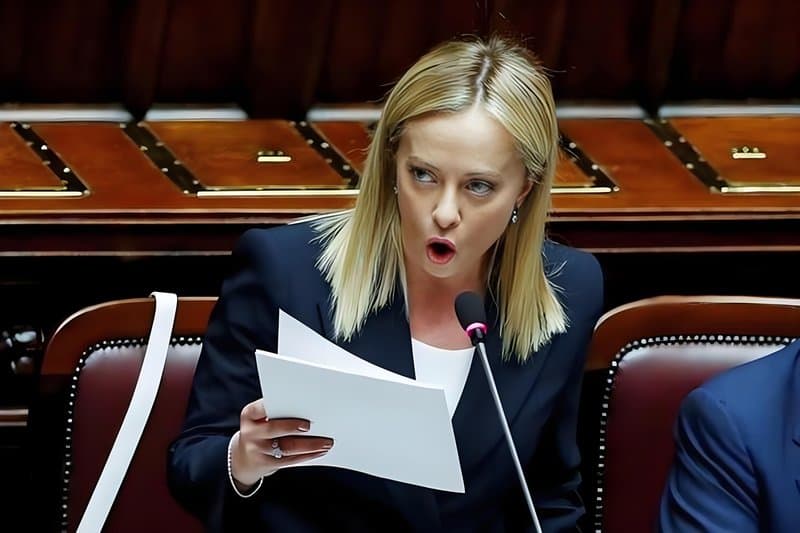
Italian Prime Minister Meloni stated that while the trade agreement between the US and Europe is a positive signal, the outline of the "framework agreement" is not sufficient for a comprehensive judgment. This statement conveys a cautious yet non-confrontational stance: not rushing to oppose or support but waiting for the execution details before making a final evaluation. In the context of growing divisions among EU countries, her remarks carry significant policy implications.
Possible Impact on Italy's Export Structure
As one of the leading exporters to the US within the EU, Italy has a trade surplus exceeding 40 billion euros. Its main exports include machinery, pharmaceuticals, automotive parts, and luxury goods. If the US imposes a 15% flat tax on several core export categories, the pressure on Italy's manufacturing sector will increase significantly.
This is why Meloni emphasizes the crucial question of whether the new tax rate will be added to existing tariffs. She warned that if 15% is the "total tax rate," it is manageable; however, if it is an "additional rate," it would significantly impact specific industries.
Italy Pushes for EU Financial Coordination
Meloni has called for EU-level coordination to introduce supportive financial tools, offering subsidies or buffer funds to industries most affected by US tariffs. This proposal has garnered some support from Southern European countries but has not yet become an EU consensus.
The Italian government has indicated its willingness to introduce limited industry support at the national level, including short-term credit guarantees or export insurance discounts for export-oriented SMEs. However, it emphasizes that individual countries' capabilities are limited, advocating for enhanced EU coordination to increase response efficiency.
Balancing Nationalism with Pragmatism
As a leader with strong nationalist overtones, Meloni has usually taken an independent stance on EU matters, but she has adopted a restrained tone regarding the US-EU agreement, indicating a shift towards pragmatism. This approach avoids opposing key EU nations while negotiating space for Italian businesses.
Her statement is interpreted as "strategic ambiguity" in the complex global trade environment—neither opposing transatlantic cooperation nor accepting outright any outcome dominated by stronger parties.
Testing EU Internal Coordination
The systemic adjustments brought by the US-EU trade agreement pose challenges not only to the economy of individual member states but also to the EU's overall policy coordination capacity. Meloni's speech indicates that EU countries will display divergent positions in terms of response measures. Export-oriented countries may call for financial subsidies, while domestically focused countries might have reservations.
In the coming weeks, whether the EU can propose a coordinated response strategy will directly affect the distribution of member states' interests in the new US-EU trade order. Italy is already positioning itself to gain more leverage and financial flexibility.