
U.S. Stocks Close Lower Under Pressure
On Thursday, the U.S. stock market continued its weak performance. The Dow Jones Industrial Average fell by 0.52% to 46,358.42 points; the S&P 500 index declined by 0.28% to 6,735.11 points; and the Nasdaq Composite Index edged down by 0.08% to 23,024.63 points. Chinese concept stocks were particularly under pressure as the Nasdaq Golden Dragon China Index dropped by 2.03%, with popular tech stocks and new energy vehicle stocks generally falling. Market participants noted that investor confidence is being hit by the U.S. government shutdown, delayed economic data releases, and differences in Federal Reserve policies.
Broad Decline in Chinese Stocks
In the Chinese stocks sector, Hesai Technology fell by more than 7%, while XPeng, NIO, and Pony.ai each dropped over 5%. TAL Education Group declined by over 4%. Analysts believe that in the current risk environment, investors are inclined to avoid highly volatile targets, and Chinese stocks, due to policy and regulatory uncertainties, have once again become the target of sell-offs.
Trump Sparks Controversy Again
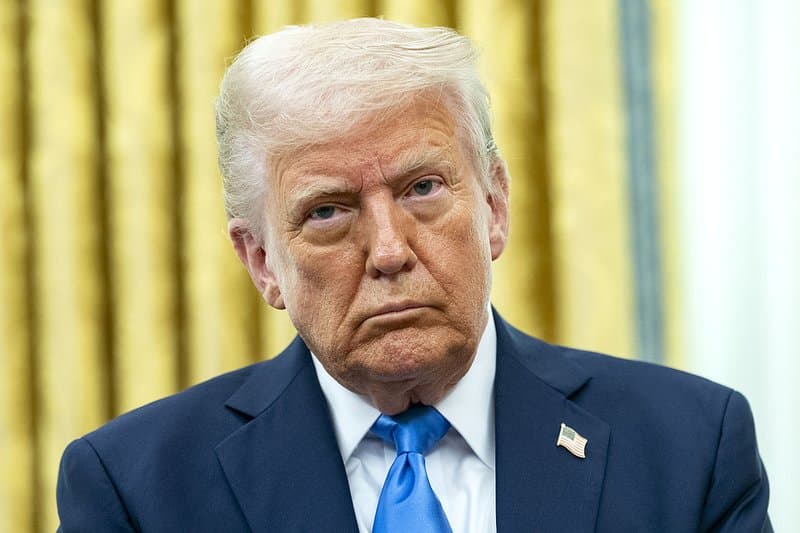
In a White House address, U.S. President Trump stated that if Democrats continue to obstruct the government funding process, he will "permanently cut Democratic projects." Although he did not specify exact areas, his strong stance has raised market concerns that fiscal policy conflicts may worsen further in the future, making the resolution of the government shutdown impasse difficult in the short term. The market interprets Trump's move as utilizing the fiscal shutdown as a political bargaining chip, attempting to force the Democrats to make concessions in budget negotiations.
Disagreements Within the Federal Reserve Emerge
Meanwhile, remarks from several Federal Reserve officials have increased market volatility. New York Fed President Williams expressed support for continued rate cuts this year to guard against a potential sharp slowdown in the labor market. He believes the inflation outlook has become milder since the beginning of the year, and adjustments in the labor market will help contain upward pressure on prices.
In contrast, Fed Governor Barr emphasized that rate cuts should be approached with caution, as inflation risks remain a primary concern. He specifically mentioned the inflationary effects of tariffs and noted that while the current interest rate environment has some limitations, it is not sufficient to support market expectations for multiple rate cuts. As a result, the market is uncertain about the future path of Federal Reserve policies, with strong expectations for rate cuts but uncertainty around their pace and magnitude.
Gold and Bond Market Dynamics
Safe-haven sentiment drove spot gold prices higher at the start of trading, fluctuating just below $4,000 per ounce. Market analysts believe that persistent rate cut expectations and uncertainties from the government shutdown provide solid support for gold. Meanwhile, U.S. Treasury yields showed limited volatility, with the 10-year Treasury yield remaining near 4%, indicating that bond market investors are still observing future policies.
Market Outlook
Analysts point out that in the coming weeks, the market will focus on two key factors: whether Congress can break the fiscal deadlock in the short term, and how the Federal Reserve will balance inflation and employment risks in its October and December meetings. If the government shutdown persists, data gaps will amplify market uncertainty, and internal policy differences within the Federal Reserve will further intensify financial market volatility.
Overall, Trump's political statements and the disagreements among Federal Reserve officials intertwine, leaving Wall Street in an environment with unclear policy signals. Analysts remind investors to exercise caution until market directions become clearer.









