

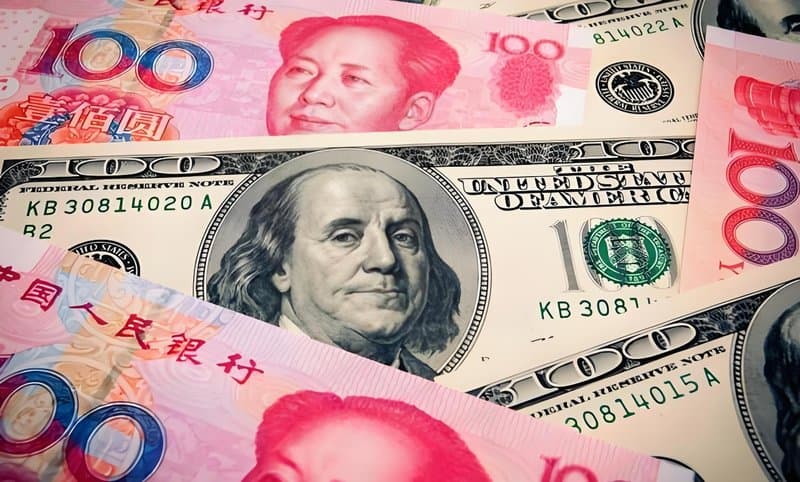
The Rare Concurrent Strength of RMB and USD
Amid significant fluctuations in major global currencies, the Chinese yuan (RMB) has recently shown remarkable resilience, stabilizing and appreciating against the U.S. dollar while also strengthening against a basket of currencies. Market data shows that this week, the RMB/USD exchange rate has consistently reclaimed key levels, with both onshore and offshore rates rising to highs not seen in over a year.
Simultaneously, several indices measuring the RMB's performance against a basket of currencies have also strengthened, reaching new highs for several months or even over a year. This concurrent strength of the RMB and USD is a rare phenomenon, particularly during periods when the USD has typically been strong, making it an unusual occurrence in the global foreign exchange market.
Multiple Factors Driving the Strong Performance of RMB
Analysts point out that the steady recovery of China's economic fundamentals is an important support for the RMB exchange rate. This year, export performance has rebounded more strongly than the market had expected, and the continued recovery of the capital market has increased the exchange settlement willingness of enterprises and investors, boosting the demand for RMB.
At the same time, the continuous issuance of "strong signals" by the RMB central parity rate has also become an important anchoring factor for the exchange rate's stabilization. Recently, adjustments to the central parity rate have been strengthened, narrowing the fluctuation range of the onshore RMB exchange rate around it.
Foreign exchange strategy experts indicate that with other non-U.S. currencies generally weakening, the relative value of the RMB becomes more pronounced, contributing to the sustained rise of the RMB index, aided by the "weak external currency" effect.
Potential Limitations on USD Strength, Fed Policy Remains a Key Variable
Looking ahead, many institutions believe the upside potential of the U.S. dollar index is limited. As the U.S. enters a new policy cycle, the possibility of further interest rate cuts by the Federal Reserve is being repriced by the market, which would weaken the momentum for the dollar's continued rise.
However, analysts also warn that the dollar has undergone significant adjustments this year, and may show some resilience in the future. Therefore, the exchange rate trend will still depend on U.S. inflation data and Fed policy statements.
For the RMB, the slowdown in the external environment does not necessarily mean increased pressure. On the contrary, against the backdrop of China's steady economic recovery, the RMB is likely to maintain a trajectory stronger than most non-U.S. currencies.
Seasonal Settlement Demand in Q4 to Continue Supporting RMB
Entering the final quarter of the year, the traditional year-end settlement demand is expected to increase significantly, considered an important driver of the seasonal strengthening of the RMB. Analysts predict that with improving overseas demand and the phased retreat of the U.S. dollar, the significant increase in settlement behavior will further support the RMB exchange rate.
In addition, recent cross-border capital flows have stabilized, domestic foreign exchange purchasing demand has decreased, and the scale of settlement has steadily increased, balancing bank sales and purchases of foreign exchange, which helps to keep market expectations stable.
Fundamental Improvements Enhance Confidence in the Forex Market
Looking at the foreign exchange supply and demand structure, the overall domestic and foreign environment is improving, and the trading sentiment in the foreign exchange market is tending towards rationality. Enterprises and financial institutions show increased confidence in the RMB, while speculative foreign exchange purchase demand has decreased significantly.
Analysts believe that with the continuous intensification of growth-stabilizing policies, the probability of the RMB maintaining a moderately strong bias in the short term is high. However, in the medium to long term, the RMB exchange rate will still fluctuate bidirectionally around a reasonable equilibrium level.
RMB Likely to Remain Strong, External Variables Still Need Watching
Overall, the stage-wise strengthening of the RMB is backed by solid foundations, including economic recovery, improved capital inflows, central parity guidance, and seasonal settlement boosts. Although the USD may still experience short-term rebounds, the RMB's relatively strong resilience is expected to continue through the end of the year.








