

Market Insiders Send Rare Warning to the Treasury Department, Concerned About Its Inclination to Cater to the White House
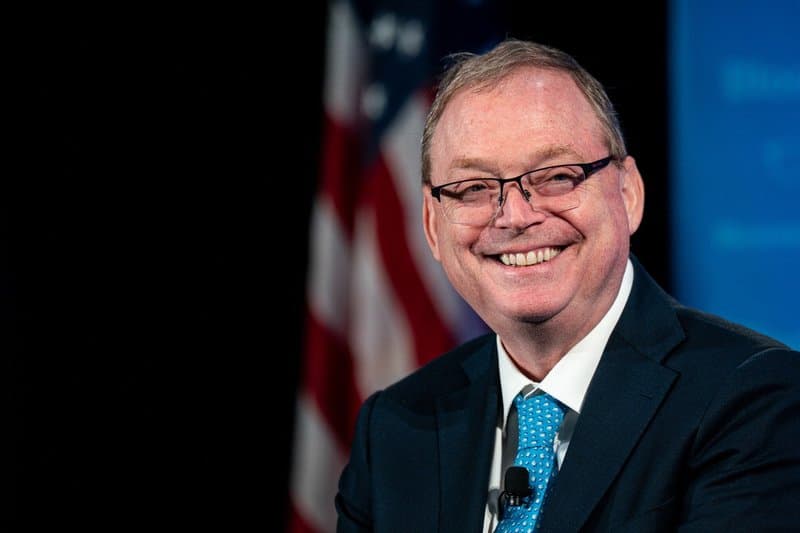
Several informed sources have revealed that multiple large banks, bond funds, and key institutional investors have recently expressed strong concerns in one-on-one communications with the U.S. Treasury Department regarding Kevin Hassett's appointment as Federal Reserve Chairman.
These opinions were gathered in November, coinciding with the Treasury Secretary holding a second round of evaluations with several candidates. Market participants worry that if Hassett takes charge of the Federal Reserve, he might drive aggressive interest rate cuts to align with President Trump's policy preferences, ignoring the risk of still-high inflation.
Market feedback indicates that bond investors are particularly concerned about policy independence. They noted that Trump has repeatedly publicly demanded larger rate cuts, and Hassett's recent public statements suggest he aligns with this stance.
Concerned about a "Repeat of the UK Truss Lesson", Market Cautious of Policy Instability Risk
Some Wall Street bond giants have made it clear in discussions that they fear the U.S. may face turmoil similar to the British market turmoil in 2022 caused by unfunded tax cuts.
Investors point out that if Hassett pushes for expansionary policy despite high inflation, it could undermine confidence in the Federal Reserve's ability to control inflation, leading to rising inflation expectations and significant volatility in the bond market.
Analysts emphasize that the Federal Reserve Chairman's policy orientation directly affects long-term yields and global risk assets. If the market believes the new chairman lacks independent judgment, the structure of U.S. asset premium may change.
Hassett's Policy Stance Widely Questioned, Viewed as a "Rate Cut Advocate"
As the White House National Economic Council Director, Hassett has frequently expressed his views on interest rate paths in recent months. He has stated that if he leads the Federal Reserve, he would "cut rates immediately" and has openly supported larger 50 basis point adjustments.
Such statements have made the market more uneasy, especially when inflation remains above the 2% target and the labor market hasn't significantly cooled. Aggressive rate cuts would be in stark contrast to the Federal Reserve's anti-inflation stance over the past two years.
Some former Federal Reserve officials have pointed out that it is currently more challenging to determine whether Hassett would act as an independent economist or lead the central bank as an executor of White House policies if he assumes the role at the Federal Reserve.
Some Market Insiders Prefer Other Candidates to Maintain Federal Reserve Credibility
Reports show that Wall Street institutions prefer other potential candidates, such as BlackRock's Rick Rieder or current Federal Reserve Governor Waller, as they are considered more professional and independent in policy.
Investment managers are concerned that if the Federal Reserve lacks recognition of Hassett internally, it could weaken the committee's ability to form a consensus, making future rate paths more unpredictable.
Bond strategists have noted that if inflation expectations rise due to policy uncertainty, the five-year breakeven inflation rate could surpass 3%, posing a new wave of pressure on U.S. financial markets.
The Federal Reserve Chairman Contest Becomes a Global Focus, Wall Street Sounds Alarm Early
As Trump hinted at announcing a formal nomination early next year, the controversy over Hassett continues to ferment in the market.
The selection of the Federal Reserve Chairman not only affects the direction of U.S. monetary policy but also concerns the stability of the global financial system. With inflation not yet fully under control and bond market volatility increasing, early expressions of concern from Wall Street indicate that Federal Reserve independence will become one of the most sensitive topics in global markets in the coming months.








