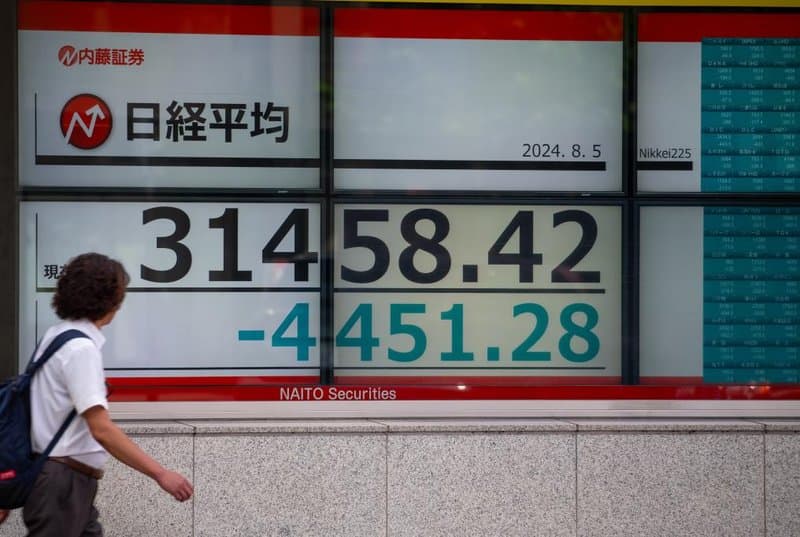
Nikkei 225 Index Strongly Surges, Rewriting Historical Highs
In the midst of global market turmoil, the Japanese stock market has demonstrated remarkable resilience. On Monday, the Nikkei 225 Index expanded its gains to 2.3%, closing at 48,657.01 points, marking the highest level in history. Over the past month, the index has risen by more than 8%, becoming one of the standout performers among major Asia-Pacific stock markets.
Analysts indicate that the index's breakthrough not only reflects investors' confidence in the earnings of Japanese companies but also signifies a reassessment of the appeal of Japanese assets globally. As expectations for US Federal Reserve rate cuts grow and the yen continues to weaken, the profit outlook for Japanese exporters has significantly improved, attracting a substantial inflow of overseas capital into the Tokyo market.
Overseas Funds Accelerate Inflow, Japan Regains Investment Favor
Market data shows that in the past two weeks, foreign investors have been continuously buying Japanese stocks, setting a record for net inflow over the past three years. According to the Tokyo Stock Exchange (TSE), foreign buying has focused on sectors like technology, automotive, and manufacturing, particularly semiconductor equipment and robotics-related companies.
Kenta Kobayashi, a strategist at Morgan Stanley's Tokyo branch, stated, "The Japanese stock market is benefiting from a global rebalancing of capital. Investors are stepping away from overvalued US stocks and structurally weak European stocks, shifting towards Japan, which boasts strong fundamentals and a loose monetary environment."
Meanwhile, the Bank of Japan continues to maintain its low-interest-rate policy, providing support for corporate financing and stock market valuations. Analysts believe that as long as the monetary environment does not tighten sharply, there remains room for the Japanese stock market to rise.
Improving Corporate Earnings as a Key Driver
One of the core drivers behind this surge is the consistent outperformance of Japanese listed companies in terms of earnings. According to data from Nomura Securities, the average net profit for companies on the Tokyo Stock Exchange's main board grew by 14% year-on-year in the first quarter of fiscal 2025, marking a new four-year high.
In particular, the automotive, electronics, and energy sectors have seen significant profit growth driven by the recovery in export demand. With Toyota Motors and Sony Group's stock prices both rising over 25% this year, they have become key forces propelling the Nikkei Index upwards.
Additionally, improved domestic investment sentiment in Japan is also providing support to the stock market. Funds flowing through the NISA (tax-free savings account) reveal that residents are reallocating their wealth towards the equity market.
Yen Depreciation Boosts Export Stock Performance
The yen's sustained weakness against the dollar has subtly propelled the stock market up. The weak yen enhances the international competitiveness of export companies, significantly increasing their overseas earnings when translated back into yen.
The market widely anticipates that the Bank of Japan will not make significant changes to its monetary policy this year, implying that the yen may remain weak, continuing to benefit the export-oriented sector.
However, some analysts also caution that if the yen continues to decline, this could trigger import inflation pressure, thereby limiting consumer growth and posing challenges to certain domestic demand industries.
Investors Optimistic Yet Cautious of Correction Risks
Despite the heightened market optimism, some institutions caution investors to be aware of short-term correction risks. With the index reaching historical highs, technical profit-taking might occur in the coming weeks.
Mizuho Securities reports: "The upward trend in the Japanese stock market remains strong, but if global markets experience new turbulence, especially in the US bond market or trade situation changes, there could be an adjustment in the short term."
Overall, the renewed breakthrough of the Nikkei 225 Index signifies that the Japanese market is emerging from a long period of stagnation, regaining the favor of global investors. Supported by global monetary easing and a manufacturing recovery, Japan is expected to continue leading in the capital markets over the coming quarters.