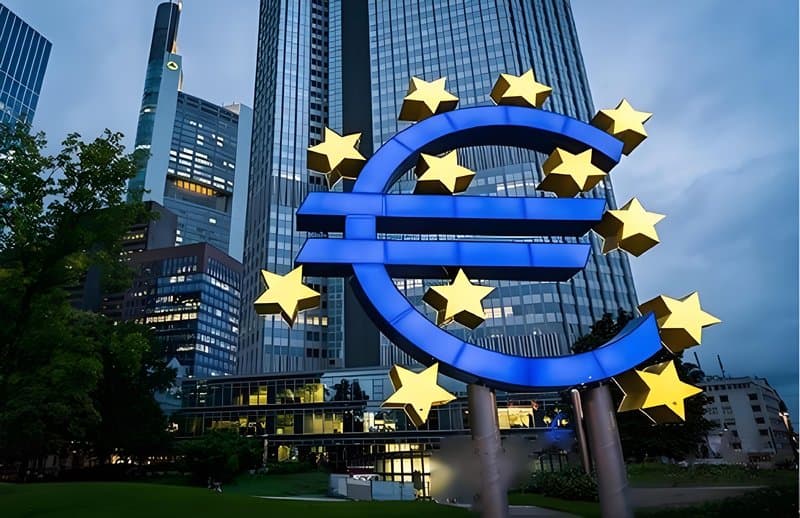
The European Central Bank Enters a Period of Policy Watchfulness, Breaking the Streak of Rate Cuts
In July 2025, the European Central Bank announced that it would maintain the benchmark interest rate at 2%, marking the first pause in its easing measures after a series of rate cuts over the past year. This move signals a cautious policy stance, awaiting clarity in external circumstances, and indicates that the Eurozone central bank is entering a new phase of "meeting-by-meeting evaluation."
The European Central Bank had previously conducted seven consecutive rate cuts, the most recent being last month, bringing rates to their lowest level since the end of 2022. The market widely anticipates this easing cycle is nearing its end, and this stabilization meets the expectations of investors and analysts.
Trade Situation Becomes a Policy Variable, Trump’s Tariff Threat Puts Pressure on Europe
The timing of this rate decision coincides with a key period in US-EU trade negotiations. US President Trump threatened, if negotiations fail, to impose punitive tariffs of up to 30% on EU goods starting in August, which has heightened vigilance among European policymakers. Although there are reports of a potential compromise, possibly reducing the rate to 15%, no formal agreement has been announced, leading the European Central Bank to maintain policy flexibility.
Insiders from the central bank revealed that global geopolitical risks are an important context for the current pause in rate reductions. Analysts believe that if the tariff policy is implemented, it would increase the cost of goods and affect the structure of import prices in the Eurozone, thereby disrupting the inflation trajectory.
Eurozone Economy Shows Resilience, But Falling Inflation Offers Room
Data shows that annualized inflation in the Eurozone has fallen back to the European Central Bank’s 2% target, reflecting easing price pressures. Simultaneously, a robust labor market and improved real incomes provide growth support for the Eurozone.
The European Central Bank mentioned in its statement, "The economy has shown a certain resilience under complex conditions." Analysts interpret this as a moderately optimistic view of the current economic fundamentals in the Eurozone, but no clear commitment has been made concerning the next interest rate path.
Market Predicts Possible Rate Cut by Year-End
Although the central bank did not adjust interest rates this time, the swap market still prices in the possibility of another rate cut of 25 basis points within the year. Investors expect the rate might eventually dip to 1.75% before the end of the year, especially if trade conflicts escalate or the risk of economic growth pressures becomes a reality.
MHA Economic Advisor Joe Nellis stated that this pause is a "strategic wise choice," allowing policymakers room to adapt. He emphasized that the ECB’s current "meeting-by-meeting evaluation" strategy will enhance policy flexibility and avoid hasty commitments.
Focus on Lagarde's Speech, Inflation Path and Policy Rhythm Become Key Points
ECB President Lagarde is expected to articulate policy positions at a subsequent press conference, facing intensive media questions on tariff impacts, Euro exchange rate trends, and policy direction for the second half of the year. Balancing policy between falling inflation and resilient growth will be a focal point for market observers.
Currently, the ECB needs to find a delicate balance between maintaining price stability and supporting the economy, and external trade conditions undoubtedly complicate the use of its monetary policy tools. In the absence of clear external signals, the ECB seems inclined to remain still, awaiting further data to guide its direction.