Congressional Disagreement Persists, Government Shutdown May Extend to Weekend
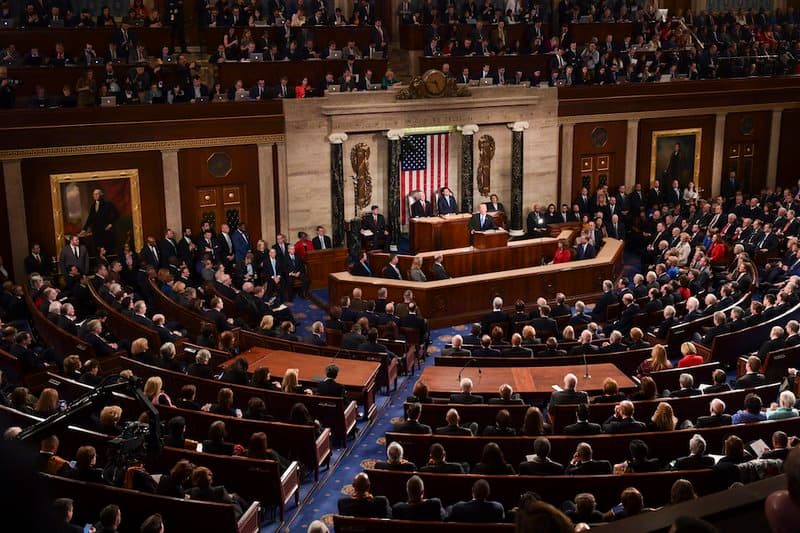
The U.S. government shutdown has reached its 41st day. Although the Senate passed a procedural vote on a temporary funding bill over the weekend to pave the way for reopening the government, the formal vote has not yet been scheduled. Analysts note that if both parties do not expedite proceedings, the government reopening could be delayed until the weekend.
The Senate plans to resume deliberations at 11 a.m. EST on Monday, but Republican leader John Thune stated that without bipartisan cooperation, following the set processes could take an entire week. Meanwhile, House Speaker Mike Johnson said that once the Senate passes the vote, he would notify House members to return to Washington 36 hours in advance, though he has not yet set a precise voting date.
The White House expressed support for the Senate's temporary funding bill, calling it "a positive step toward ending the government shutdown." However, the complexity of legislative procedures and partisan opposition render the process of reopening the government filled with uncertainty.
Senate Procedurally Approves, House Awaits Return
The Senate cleared the first hurdle for the temporary funding bill with a procedural vote of 60 to 40 on Sunday night, surpassing the minimum threshold to break a filibuster, indicating the bill might move to the final voting stage.
However, this vote does not mean immediate effect. The Senate must still complete a series of statutory procedures, including debate, amendment review, and a final vote. If some members use procedural rules to delay the process, the government may remain "closed" for several more days.
Kentucky Republican Senator Rand Paul has publicly opposed a provision in the bill that restricts marijuana sales and might use procedural means to delay the vote. This compels Senate leadership to seek broader bipartisan consensus to ensure the bill completes all processes this week.
House Vote Undetermined, Republican Differences Persist
Speaker Johnson expressed hope on Monday that the House could vote on the bill by Wednesday, provided the Senate completes all voting work first. Due to flight delays and weather impacts, he informed House members in advance to return to Congress to ensure timely participation in the vote.
Johnson emphasized, "We must finish this as soon as possible," but acknowledged that differences persist within the House. Some conservative Republicans demand a longer-term funding bill effective until September next year to avoid future shutdown deadlocks.
Democrats have expressed dissatisfaction with the current agreement. House Minority Leader Hakeem Jeffries stated, "We will not support a bill lacking extended healthcare subsidies," urging Republicans "not to sacrifice public welfare for political victories."
Temporary Funding Bill Content Revealed, Funds Through January Next Year
According to the Senate-approved draft, the bill will provide federal funding until January 30, 2026. The plan includes full-year budgets for agriculture, veterans affairs, and Congress itself, while providing short-term funding for other agencies.
The bill also stipulates that federal employees will receive full back pay during the shutdown and restores federal aid to state and local governments. The Supplemental Nutrition Assistance Program (SNAP) will be extended to next September, continuing to support 42 million low-income American families with food assistance.
Additionally, the bill contains bipartisan budget procedure reform provisions, limiting the White House's future use of continuing resolutions to sustain government operations to prevent similar shutdowns from occurring again.
Lack of Healthcare Subsidy Extension Causes Democratic Discontent
Despite the bill potentially ending the shutdown, dissatisfaction is rapidly increasing within the Democratic Party. Several Democratic governors and senators criticized the agreement for failing to extend the Affordable Care Act (ACA) subsidy provisions, arguing this will burden millions of Americans with higher medical costs.
California Governor Gavin Newsom described the agreement as "disappointing and short-sighted," while Massachusetts Senator Elizabeth Warren bluntly stated, "Congress should fight for people's healthcare rights, not compromise in party politics."
Analysts indicate that although the temporary funding bill provides a breakthrough for ending the shutdown, long-standing differences over healthcare, budget, and fiscal policy will continue. As a Washington think tank scholar noted, "This is not the end of the problem, but the beginning of another political tug-of-war."
Market Reacts Positively, But Uncertainty Remains
Boosted by news that the shutdown may end, U.S. stocks opened higher on Monday, with the S&P 500 index rising more than 1% at one point, led by the technology sector. However, economists warn that the resumption of government operations does not entirely eliminate risk, as flight disruptions and public project delays may still take days to return to normal.
As the final votes in both houses approach, the market is closely watching to see if Trump will promptly sign the bill. Any further procedural delays could prolong the shutdown, pressuring the U.S. economy and financial markets.