

Senate Vote Results and Legislative Process
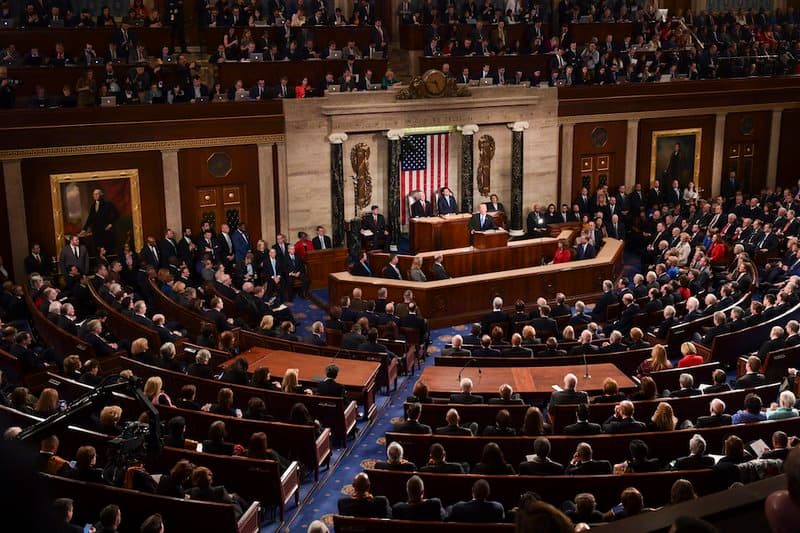
The United States Senate narrowly passed a resolution with a vote of 51 to 47, aiming to terminate the comprehensive tariff policy implemented by the president under the "national emergency" declaration. This result marks the first bipartisan breakthrough in Congress on tariff issues during Trump's presidency. The resolution still requires approval from the House of Representatives to take effect. However, in previous voting rounds, House Republicans repeatedly blocked similar proposals from reaching the voting stage, leaving substantial uncertainty about its future progression. Even if the House passes it, should the president exercise a veto, Congress would need a two-thirds majority to override it.
The Political and Legal Struggle Behind the Resolution
The Trump administration used the "national emergency" as a legal basis for tariff decisions, granting the executive branch extensive taxing powers. This Senate vote is seen as a warning against the expansion of executive power. Several Democratic senators believe the policy disrupts international trade rules and increases domestic costs, while some Republicans are concerned that prolonged trade tensions could harm the competitiveness of U.S. manufacturing. Analysts note that although the vote has greater symbolic significance, it reflects Congress's attempts to reclaim some legislative primacy in trade and tax matters.
Canada and Brazil as Focal Points
In addition to global tariffs, the Senate also passed separate resolutions this week regarding Canada and Brazil, aiming to remove additional tariffs imposed on these countries. Earlier, on October 25, the U.S. president threatened to impose an additional 10% tariff on Canada, eliciting a strong reaction from Ottawa. Canadian unions and several politicians criticized the U.S. for abusing tariff tools and harming bilateral cooperation. Meanwhile, Brazil also expressed dissatisfaction, stating that the U.S. measures are politically motivated and affect trade fairness.
Warnings from Scholars and the Economic Community
The economic community generally believes that frequent tariff adjustments increase global supply chain uncertainty. Nobel Prize-winning economist Paul Romer previously noted in a public speech that if the U.S. tariff policy continues to expand, it will weaken corporate investment intentions and hinder manufacturing recovery. He warned that, against the backdrop of trade barriers, overheated AI investments, and fiscal pressures, the U.S. economy might face a new recession risk. Reports from several think tanks indicate that tariff measures have already raised import prices, indirectly squeezing consumer spending.
Future Outlook and Potential Impact
Procedurally, if the resolution is shelved in the House, the Senate's achievement will be difficult to implement; if it reaches the voting stage, it may trigger more intense partisan debates. In the market, investors have begun re-evaluating the trajectories of the dollar and U.S. Treasury yields, with some institutions expecting that should tariffs be lifted, short-term inflation pressures might ease, and the import-export structure could improve. Diplomatically, the responses from Canada and Brazil will also serve as important indicators of changes in U.S. trade policy.
Overall, the Senate vote does not signify an immediate shift in tariff policy, but its political signal is clear: divisions within Congress over using tariffs as a diplomatic tool are widening. In the coming weeks, the actions of the House and the White House's response will determine whether this resolution can become a pivotal point in reshaping U.S. trade policy.








