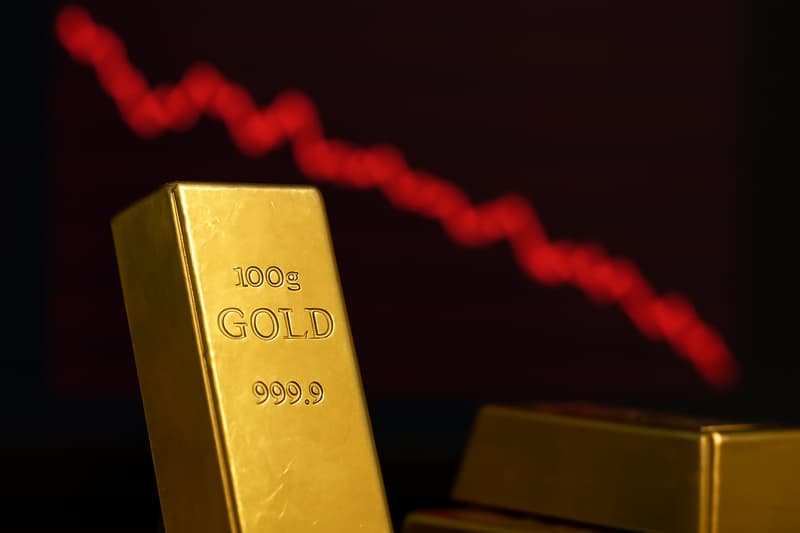
Investor Profit-Taking at High Levels Triggers Gold Price Correction
The gold market has experienced a rare rapid decline, primarily driven by concentrated profit-taking behavior among investors. Throughout the year, gold prices climbed steadily, supported by various favorable factors. From central bank purchases to expectations of interest rate cuts, and even geopolitical uncertainties, all fueled the rise in gold prices. However, this continuous growth also led to the accumulation of speculative positions. Once market sentiment shifted slightly, profit-taking funds began to pull out rapidly. Some investment institutions sold at high levels to lock in profits, which led to a chain reaction in price declines.
Independent analysts pointed out that the recent sharp fluctuations in the gold market reflect subtle changes in market confidence. Although there are still funds attempting to position at lower levels, the overall increase in risk appetite is putting pressure on safe-haven assets. Traders generally believe that in the short term, gold may enter an adjustment cycle, waiting for new driving signals to emerge.
Weakening Safe-Haven Demand Undermines Gold Price Support
In addition to technical selling, the significant cooling of risk aversion has become another main factor undermining gold prices. On the international front, progress in trade negotiations and an easing of geopolitical risks have changed investors' risk assessments. U.S. President Trump recently made positive comments on the U.S.-China trade issue, suggesting an increased possibility of reaching an agreement, which has significantly reduced market concerns about a trade war. Simultaneously, potential signs of easing in the Russia-Ukraine conflict have also weakened gold's safe-haven status.
Despite ongoing conflicts, the optimistic expectation of a ceasefire has redirected funds towards risk assets. The weakening of safe-haven demand not only undermined gold's support but also enhanced the attractiveness of dollar assets, prompting some investors to shift from precious metals to bond and stock markets.
Political Developments Boost Risk Appetite
The U.S. domestic political situation has also become a crucial variable affecting gold prices. The government shutdown causing delays in economic data once heightened market uncertainty, but the latest signs indicate that the government may resume operations soon. The negotiation intentions between Democrats and the White House have improved market expectations, resulting in increased investor confidence.
Moreover, officials from the National Economic Council have released positive signals, suggesting that the policy stalemate might be resolved within the week. As political tensions ease, market risk appetite increases, further reducing the demand for gold as a safe-haven asset. Analysts widely believe that if the release of economic data resumes and interest rate expectations remain stable, gold prices might continue to be under pressure in the short to medium term.
Adjustments May Pave the Way for a New Cycle
Considering multiple factors, the current decline in gold prices is both a natural result of high-level corrections and a reflection of a phase of weakened safe-haven demand. In the short term, if global political risks do not intensify and the dollar remains strong, gold may continue to fluctuate weakly. However, in the medium to long term, inflation expectations and central bank gold-buying trends may still provide potential support for gold prices.
Analysis agencies suggest that investors, when assessing market risks, should pay attention to macro policy directions and geopolitical event developments. Gold market volatility may continue, but each correction could create new entry opportunities for long-term positioning.