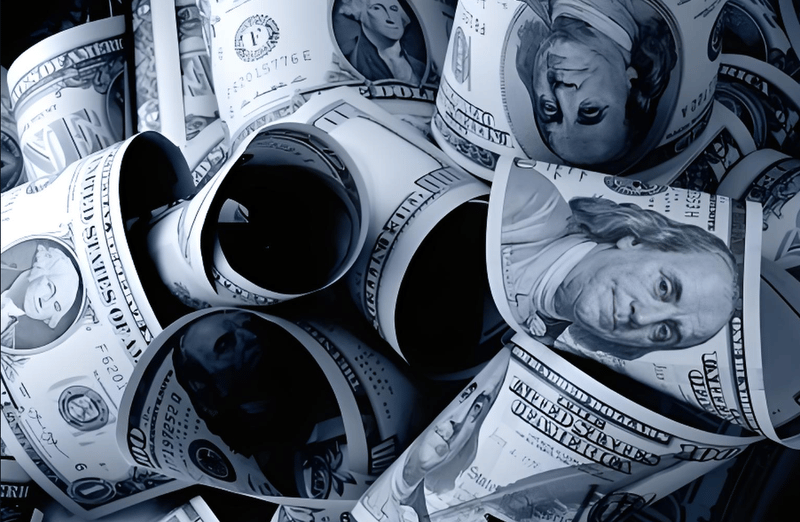
Stronger Dollar Increases Gold Holding Costs
On Tuesday, gold prices faced pressure again as the dollar index broke through a weekly high, becoming the market's focal point. As the dollar continues to strengthen, investors holding other currencies are seeing a noticeable increase in the cost of buying gold, directly diminishing gold's appeal. The movement of capital in the forex market indicates that the dollar's position as the world's primary reserve currency remains stable in the short term, thereby limiting the room for gold price recovery.
Analysts point out that the upward momentum in the dollar is driven not only by the resilience of U.S. economic data but is also closely linked to uncertainties overseas. Especially after a major political shift in Japan, safe-haven funds in the forex market have regrouped into dollar assets, further amplifying the pressure on gold.
Japan's Political Shift Sparks Forex Volatility
After Japan's first female Prime Minister Sanae Takaichi took office, her firm conservative stance prompted the market to reassess future fiscal policies. Investors generally expect the new government to adopt more aggressive fiscal stimulus, which means the Bank of Japan will face a more complex situation regarding interest rate hikes. The yen is thus under pressure, dropping to a weekly low, providing additional support for the dollar.
Economist Fred Neumann noted that Japan might delay its monetary tightening process to accommodate fiscal expansion, and this uncertainty in policy coordination leads international investors to prefer holding dollar assets. The weak yen has boosted the dollar in the short term, but it has also increased volatility in the precious metals market.
Global Monetary Policy Signals Becoming More Complex
In the European and American markets, there is a misalignment between central bank statements and market expectations. European Central Bank officials warn that banks face dollar funding pressures, which has heightened liquidity concerns but has not significantly boosted gold. Meanwhile, the continued decline in U.S. bond yields and the narrowing of the two-year and ten-year spreads are being interpreted by investors as a precursor to future rate cuts.
Market forecasts suggest the Federal Reserve might cut interest rates by 25 basis points at its late October meeting, with a possible follow-up by year-end. In theory, this should support gold prices, but in reality, investors' concerns over inflation and employment are dominant, making it difficult for gold to benefit for now. Market unease over delayed inflation data has seen short-term funds flow more into the bond market rather than precious metals.
Overall Pressure on Precious Metals Sector
Silver prices are also falling, down by as much as 7%, leading platinum and palladium to decline as well. Market analysis widely believes that the simultaneous adjustment in the precious metals sector reflects an overall withdrawal from safe-haven assets. Trader Tai Wong noted that the oscillation of silver prices around $50 reflects a lack of direction in the market, while gold's weakness acts as a catalyst for further silver volatility.
Citi analysts expect that given the temporary stability provided by government shutdowns and trade talks, gold prices might consolidate within a range over the next two to three weeks, meaning the precious metals market will continue to face pressure.
Geopolitical Factors Remain Potential Risk Sources
Although market risk appetite is increasing, geopolitical uncertainties still lurk beneath the surface. Trump's refusal to engage in "meaningless meetings" with Putin highlights the continued stalemate in U.S.-Russia relations. The Kremlin's refusal to accept proposals to halt warfare adds more uncertainty to the ceasefire prospects.
Although these events have not directly caused a sharp drop in gold prices in the short term, they weaken the persistence of safe-haven demand, making investors more cautious between risk and return. Overall, the combined strength of the dollar and the complexity of global policies are reshaping the short-term landscape of the precious metals market. Gold and silver may remain in a cycle of volatility, awaiting new policy signals or geopolitical events as triggers.