What is a Dead Cat Bounce?
A "Dead Cat Bounce" is a technical analysis term describing a short-term rebound during a downtrend. The phrase originates from a saying: "Even a dead cat will bounce if it falls from a great height," meaning even something that appears hopeless or in a declining market can experience a temporary rebound.
A dead cat bounce typically occurs in a sharply declining market or stock, where after significant price drops, investors might expect a rebound. This rebound is often short-lived and does not change the overall downtrend. It is driven by short-term buying activity or profit-taking, rather than a genuine market bottom or trend reversal.
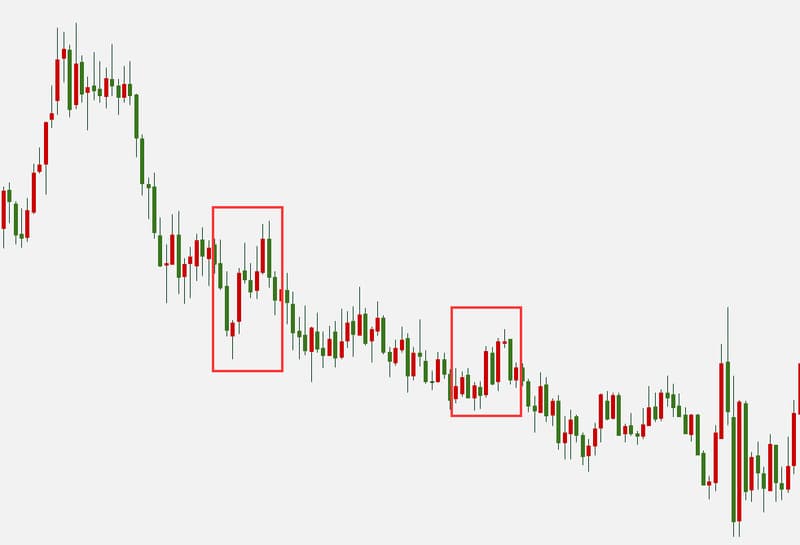
The dead cat bounce is a concept in technical analysis, where investors use charts and indicators to identify such scenarios. It can occur in various markets, including stock, forex, and commodities.
Characteristics of a Dead Cat Bounce
A dead cat bounce is a short-lived rebound phase, typically characterized by declining volume, limited rebound amplitude, lack of trend reversal signals, and high risk.
- Short-term Nature: A dead cat bounce is a brief market rebound, usually lasting only a few days to a few weeks. It typically occurs after a significant drop, leading investors to believe the market has bottomed, but it is often only a short-term rebound rather than a true market bottom.
- Declining Volume: One hallmark of a dead cat bounce is that trading volume usually decreases during the rebound phase. This indicates a relatively low level of investor participation, lack of sustained momentum to support continuous upward movement.
- Limited Rebound Amplitude: The rebound amplitude of a dead cat bounce is usually limited. It often fails to fully recover the previous decline and encounters resistance or moving averages, leading to another downturn.
- Lack of Trend Reversal Signals: A dead cat bounce does not signify a trend reversal. It is merely a short-term rebound phase and not a genuine trend reversal. Investors should remain cautious and not mistakenly believe the market has reversed.
- High Risk: Since a dead cat bounce is not enduring and occurs during a downtrend, it carries high risk. Investors should manage risks carefully and avoid relying solely on dead cat bounces for trading decisions.
Principles of a Dead Cat Bounce
The principle behind a dead cat bounce can be explained by the temporary change in investor sentiment and technical factors influencing a short-term market rebound.
- Investor Sentiment: After a significant decline, the market may become excessively sold off, causing investor sentiment to turn highly pessimistic and panicked. This creates excessive pressure, leading to an overly rapid or substantial price drop. When bearish sentiment peaks, the market might experience a short-term rebound as some investors perceive the price has dropped too much and start buying in search of profits.
- Technical Factors: Technical indicators and chart patterns in the market can also influence a dead cat bounce. For instance, certain technical indicators might show the market is oversold, and certain support levels or moving averages might act as triggers for a rebound. These technical factors attract the attention of short-term traders, prompting them to participate in buying.
In summary, the principle of a dead cat bounce can be boiled down to a temporary change in investor sentiment leading to a short-term market rebound after a significant decline; meanwhile, technical factors may provide some buying opportunities. However, investors should be aware that this rebound is often brief, and the market is likely to resume its downtrend.
Uses of a Dead Cat Bounce
As one of the classic patterns frequently observed in financial markets, a dead cat bounce has several common uses.
- Identifying Short-term Rebound Opportunities: A dead cat bounce can be used to identify short-term trading opportunities. After a significant market drop followed by a dead cat bounce, some investors might consider short-term trades during this rebound period to seek quick profits. They may buy during the bounce and sell when it ends or when prices drop again.
- Risk Management: A dead cat bounce can also serve as a risk management tool. For investors already holding bearish positions or looking to short the market, the occurrence of a dead cat bounce provides an opportunity to reduce position risks or adjust stop-loss levels. They can decrease positions or adjust stop-loss points during the bounce to maintain risk control when the market resumes its downtrend.
- Confirmation of Reversal Signals: While a dead cat bounce is not an absolute indicator of a trend reversal, it can serve as confirmation for other indicators and patterns. When the market experiences a significant decline followed by a dead cat bounce, investors can use it in conjunction with other trend reversal signals for confirmation. For instance, when a dead cat bounce coincides with a trendline break or other patterns, it can increase the reliability of the reversal signal.