What is a Bear Call Spread?
A Bear Call Spread involves selling a call option with a lower strike price and simultaneously buying a call option with a higher strike price on the same underlying asset and expiration date. This creates an options strategy known as a vertical call spread. Investors typically use this strategy when they expect the market to continue its downward trend.
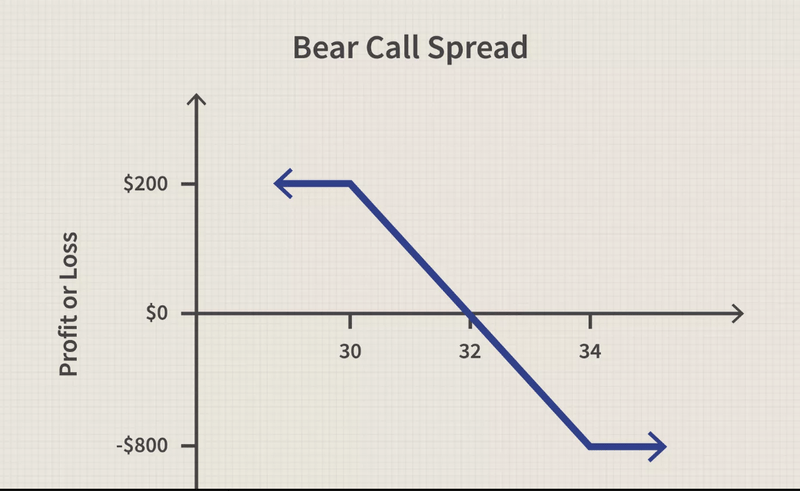
The purpose of a Bear Call Spread is to pay a lower premium by buying the higher strike call option while receiving a higher premium by selling the lower strike call option, thus providing risk protection on the higher strike call option. When the market continues to decline, the higher strike call option bought will likely not be exercised, resulting in the investor only paying a lower premium and potentially earning a higher premium from the sold lower strike call option, creating risk protection.
Types of Bear Call Spreads
Bear Call Spreads can be categorized into the following three types depending on the applicable market conditions.
- Vertical Call Spread: Involves selling a call option with a lower strike price and simultaneously buying a call option with a higher strike price on the same underlying asset and expiration date. This strategy is suitable for bearish expectations where the asset's price is expected to decline or not increase.
- Calendar Call Spread: Involves selling a call option with a near-term expiration and buying a call option with a longer-term expiration, with both options having the same strike price. This strategy is suitable for neutral or slightly bearish market expectations, where the asset's price remains stable or slightly declines in the near term but may increase in the long term.
- Diagonal Call Spread: Involves selling a call option with a lower strike price and near-term expiration while buying a call option with a higher strike price and longer-term expiration. This strategy is suitable for neutral or slightly bearish market expectations, where the asset's price remains stable or slightly declines in the near term but may increase without exceeding the higher strike price in the long term.
Characteristics of Bear Call Spreads
Bear Call Spreads, as an options trading strategy seeking to profit in bearish market conditions, have the following characteristics:
- Bearish Strategy: Suitable for market conditions where the asset's price is expected to decline or remain range-bound.
- Fixed Profit: Profits are generated when the asset's price is below the lower strike price, with maximum profit being the net premium received.
- Limited Risk: Losses are incurred when the asset's price is above the higher strike price, with the maximum loss being limited.
- Low Sensitivity: When implied volatility increases, the changes in premiums for both call options tend to offset each other.
- Time Value: As time passes, the decrease in the time value of both call options increases the strategy's profit.
Uses of Bear Call Spreads
Bear Call Spreads are suitable for scenarios where the market or a specific asset's price is expected to decline, serving the following purposes:
- Earning Opportunities: Can be used to predict moderate declines or range-bound movements in the asset's price, earning from the decay of time value by collecting the net premium.
- Risk Hedging: Can be used to hedge against the risk of rising prices when writing naked call options. Buying the higher strike call option limits the maximum loss while reducing the cost and breakeven point.
- Protective Strategy: Can be used to control the risk of losses when prices rise. By buying a call option, investors can set an upper limit of protection at a higher price, reducing losses if the market rises.
- Hedging Instrument: Can act as a hedging tool, especially for investors with existing holdings or portfolios, providing risk mitigation in a declining market.
Common Strategies Using Bear Call Spreads
Bear Call Spreads are frequently used in bearish market conditions with options trading, commonly employing the following strategies:
- Bearish Call Spread Strategy: Involves buying one call option at a higher strike price and selling another call option at a lower strike price, both with the same expiration date. This strategy is suitable for moderately bearish or range-bound expectations, utilizing high implied volatility to lower the cost of the bought call option and collecting the premium from the sold lower strike call option.
- Synthetic "Like Asset" Strategy: Involves buying out-of-the-money put options while selling an equal amount of out-of-the-money call options on the same underlying and expiration month. This strategy is used for leveraged directional trading, with lower capital requirements but requires margin payments.
- Hedging Naked Call Options Risk Strategy: Involves selling a call option at a particular strike price while buying a higher strike call option to protect against the risk of rising prices. This strategy is suitable for scenarios where the asset's price is expected to decline slightly, and the hedge position provides protection against the risk of price increases.
Differences Between Bear Call Spreads and Bear Put Spreads
Bear Call Spreads and Bear Put Spreads are two different options trading strategies, with the following differences:
- Construction: A Bear Call Spread involves selling a call option at a lower strike price and buying a higher strike call option. A Bear Put Spread involves buying a put option at a higher strike price and selling a lower strike put option.
- Application: Bear Call Spreads are suitable for moderate downward movements in the asset's price, reducing margin requirements compared to naked call writing. Bear Put Spreads are suitable for moderate declines or range-bound movements, lowering the premium cost compared to buying put options outright.
- Profit and Loss: The maximum profit for a Bear Call Spread is the difference in premium between the two options, while the maximum loss is the difference in strike prices minus the net premium received. For a Bear Put Spread, the maximum profit is the difference in strike prices minus the net premium paid, while the maximum loss is the net premium paid.
- Risk Points: Bear Call Spreads require margin payments and have lower profit potential. Bear Put Spreads' buyer's rights are eroded by time.