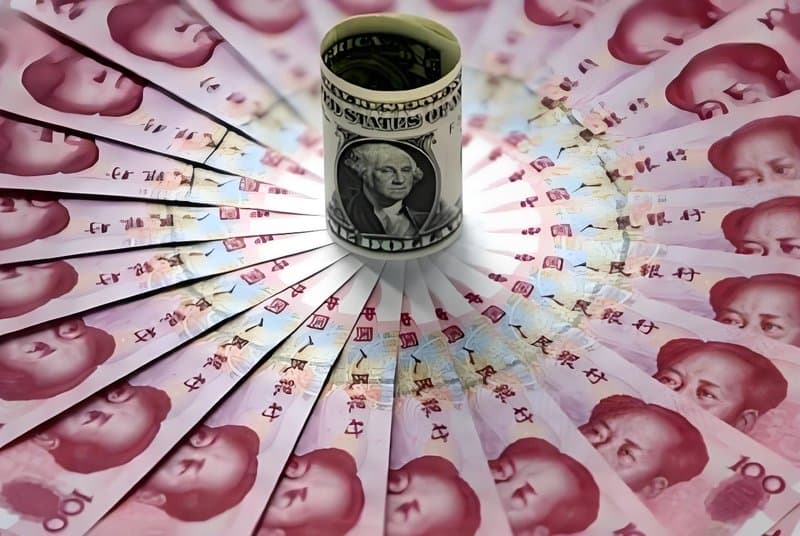
Renminbi Reaches Near Ten-Month High
Since late August, the Renminbi has shown a steady strengthening trend against the US dollar. Both onshore and offshore markets appreciated, hitting their highest points since November last year. Data shows that on September 11, the onshore renminbi once reached 7.116, while the offshore renminbi peaked at 7.112, with market confidence evidently improving.
Weakening Dollar Offers External Boosts
Recently, the dollar index has been declining, providing an opportunity for non-US currencies to appreciate. Fed Chair Powell signaled potential rate cuts at the global central bank summit, coupled with US employment and inflation data indicating economic slowdown, raising the probability of a September rate cut. Against the backdrop of a weaker dollar, the Renminbi passively gained appreciation momentum.
Foreign Capital Inflows Improve Market Sentiment
Domestic capital market performance has also bolstered the Renminbi's trajectory. The A-shares have shown a stronger rebound recently, with accelerated inflow of overseas funds into Chinese assets, not only fueling settlement demand but also boosting overall forex market sentiment. The active positioning of foreign funds has somewhat alleviated previous concerns about Renminbi depreciation, driving a steady strengthening of the exchange rate.
Central Exchange Rate Control Forms Policy Synergy
Aside from market supply and demand, policy factors have played a crucial role. The central exchange rate of the Renminbi has been edging closer to the 7.1 mark for several days, reaching a new high for this phase. Industry insiders point out that since the Renminbi exchange rate index hit its low in late June, the central bank has intensified control of the central exchange rate to guide the stable functioning of the Renminbi against a basket of currencies. This operation has not only stabilized market expectations but also technically boosted the Renminbi's strength.
Expert Opinion: Internal and External Factors Resonating
Analysts believe that the current round of Renminbi appreciation is not driven by a single factor, but rather the result of multiple internal and external factors acting together. Externally, the weakening dollar has provided room for the Renminbi; internally, the domestic economic fundamentals are relatively stable, compounded by policy control and a warming capital market, collectively supporting the upward movement of the exchange rate.
Short-term Outlook Remains Optimistic
Looking ahead, many experts believe the Renminbi will continue to operate on the stronger side in the short term. If the dollar continues to come under pressure, and the central exchange rate maintains strong guidance, the Renminbi is expected to sustain a stable appreciation trend. Some institutions predict that if the Renminbi can remain in the stronger range by year-end, settlement demand will be further unleashed, providing additional support for the exchange rate.
Risk Factors to Watch
However, some analysts caution that close attention should be paid to two major uncertainties in the future: one is if US economic data unexpectedly strengthens, potentially causing the dollar to rebound, which would affect the Renminbi's trajectory; the other is the changes in both domestic and foreign capital flows, particularly the sustainability of foreign capital inflows, which will directly relate to whether the Renminbi can maintain its strength.
Conclusion
Overall, the recent strong performance of the Renminbi exchange rate is the result of both internal and external forces. With the continued evolution of the Fed's policy direction and the domestic macro environment, the Renminbi is poised to find a new balance in stability. However, investors should remain cautious, watch the dollar's movements and the subsequent strength of central exchange rate control to better seize forex market opportunities.