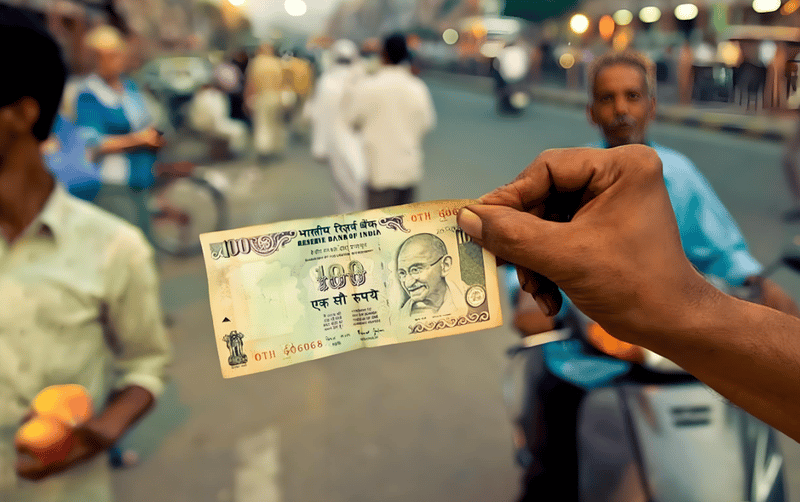
Rupee Hits Record Low
Recently, the Indian rupee fell to a record low of 88.35 against the US dollar, marking a decline of over 3% since the beginning of the year. Although it has slightly rebounded since, the overall trend remains weak. Market insiders largely attribute the rupee's fall to the impact of US tariffs and the withdrawal of foreign capital.
Tariffs Batter Exports and Competitiveness
US President Trump's announcement of a 50% tariff increase on Indian goods is seen as the direct trigger for the rupee's rapid depreciation. High tariffs have weakened the international competitiveness of Indian export goods, posing a risk to foreign exchange earnings. The decline in exports not only squeezes corporate profits but also directly reduces the inflow of dollars, increasing pressure on the rupee.
Foreign Capital Withdrawal Increases Dollar Demand
Besides the tariff issue, the persistent withdrawal of foreign institutional investors has further worsened the market environment. Since July, foreign investors have sold over 1 trillion rupees in assets. As funds flow back to the dollar, demand for the dollar rises, thereby driving down the rupee's exchange rate. The outflow of capital also puts pressure on the Indian stock and bond markets, further denting investor confidence.
Import Dependence Amplifies Impact
India's heavy reliance on oil imports, accounting for about ninety percent of its demand, means that a weaker rupee significantly increases the cost of oil priced in dollars, directly raising domestic gasoline and diesel prices. The increase in transportation costs further impacts the prices of goods and services, intensifying inflationary pressures. Meanwhile, the costs of importing gold and other commodities also increase due to exchange rate fluctuations, adding to the financial burden.
Inflation and Economic Strain
The rupee's depreciation-driven imported inflation has started to materialize. Indian consumers face higher living costs, with energy and transportation prices rising particularly sharply. Economists warn that if the currency continues to depreciate, it could further drive up food and essential goods prices, weakening consumer spending power and dragging down economic growth.
Policy Stance and Market Expectations
Despite a bearish market sentiment, some experts argue that the rupee's depreciation is not entirely negative. The Reserve Bank of India might allow a gradual weakening of the rupee while maintaining stability in the foreign exchange market to provide some cushion for export businesses in global competition. By boosting export competitiveness, India might partially offset the negative impacts of US tariffs.
Short-Term Outlook
Traders generally believe that the Indian rupee will remain under pressure in the short term. Unless the trend of foreign capital outflow eases or there are adjustments to US tariff policies, the rupee is unlikely to escape its weak status. If the dollar remains strong, the rupee's depreciation could widen further. Meanwhile, the market will closely watch if the Reserve Bank of India intervenes to balance the conflict between inflation and economic growth.