

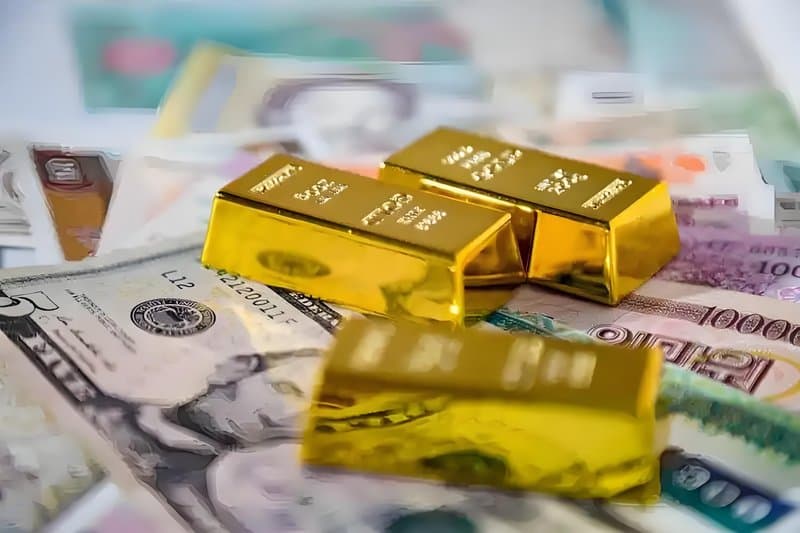
Gold Becomes a Focal Asset Amid Market Turmoil
With recent U.S. economic data frequently signaling weakness, global financial markets have experienced significant volatility, leading to a swift rise in safe-haven demand. Gold has once again become a core asset for investors. Signs of a deteriorating labor market have sparked widespread investor concern, combined with simultaneous stock and bond market declines, prompting large-scale capital flow into the precious metals market, with gold prices rising to key positions.
Analysts point out that this round of increases is not simply due to short-term emotional impacts but rather a structural shift formed by a confluence of multiple macro factors. These include continued weakness in U.S. employment data, renewed expectations for a rate cut by the Federal Reserve in December, intense global stock and bond market volatility, and sustained support from national-level buyers.
Labor Data Under Pressure Fuels Rise in Easing Expectations
The U.S. labor market has recently shown clear signs of cooling, with rising initial and continued unemployment claims raising market concerns. The slowdown in employment momentum not only deepens economic downturn pressures but also prompts investors to reassess the Federal Reserve’s policy path for the year.
Market tools indicate that the probability of a rate cut in December has risen back above 50%. Several institutions believe that if the soon-to-be-released delayed September non-farm payrolls data continues to weaken, the market will tend to anticipate an earlier policy turning point, significantly enhancing gold's attractiveness in this context.
Global Financial Market Volatility Bolsters Safe-Haven Demand
Recently, global capital markets have not shown signs of stability. The three major U.S. indices have been under continuous pressure, led by tech stocks, with European and Asian markets experiencing pullbacks to varying degrees, and bond yield fluctuations widening. Against the backdrop of widespread pressure on risk assets, gold's traditional role as a safe-haven product has become prominent once again.
Reports from institutions indicate that some fund portfolios are accelerating their tilt towards gold to hedge against potential policy uncertainties and market volatility. In the face of multiple global economic challenges, the strategic position of preserving assets has markedly improved.
Continued Central Bank Gold Purchases Enhance Long-Term Demand
Another strong support for the rise in gold comes from official departments. Over the past three years, continued central bank purchases have become a key source of gold demand, especially against the backdrop of geopolitical tensions and the diversification of foreign exchange reserves.
Analysts note that given the current international situation's high sensitivity, the trend of central bank gold allocation is expected to remain active in the medium to long term, providing a solid bottom support for gold prices.
Sudden Rise in Policy Uncertainty
Beyond economic data and safe-haven demand drivers, U.S. political factors are adding more variables to the market. As high-level personnel discussions intensify, speculation about the future leadership style of the Federal Reserve has increased policy uncertainty. Investors generally worry that the stability and continuity of monetary policy might be affected, leading to more market fluctuations.
In this context, gold is increasingly favored as a tool to hedge systemic risks.
Multiple Favorable Factors Boost Gold to a New Stage
Combining pressure on employment, rate cut expectations, a rise in safe-haven sentiment, and central bank purchases, this week is seen as a critical window period for gold's trend. If the upcoming non-farm employment report continues the weak trend, gold is expected to further explore new ranges.
The current market generally believes that gold is in the early stage of a new upward cycle. As market focus gradually concentrates on economic data and policy signals, the precious metals market may become an important indicator of global capital flow in the coming weeks.
Investors will closely follow the public speech of New York Fed President Williams this week to assess the Federal Reserve's latest evaluation of the current economic situation and future policy direction.








