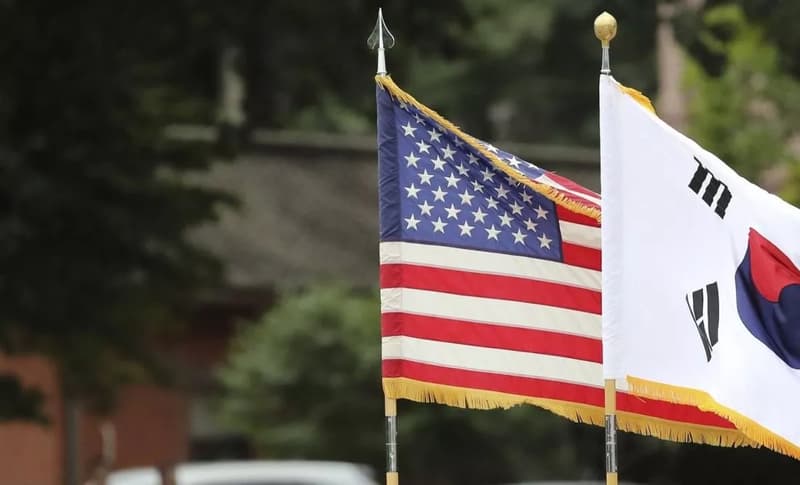
South Korea and the US to Restart Trade Coordination Meetings
On Monday, the South Korean Ministry of Trade, Industry and Energy announced that South Korea and the United States will hold a meeting next month to focus on non-tariff barrier issues under the framework of the Korea-U.S. Free Trade Agreement (FTA). This meeting will be jointly hosted by the South Korean Ministry of Trade, Industry and Energy and the U.S. Trade Representative's Office (USTR) to further implement the consensus reached in previous tariff negotiations and promote a more transparent and stable trade environment.
The South Korean chief negotiator, Yeo Han-koo, Director-General of Trade Negotiations at the Ministry, pointed out at the briefing that the core issues of the meeting will cover non-tariff measures in areas such as automobile access, digital services regulation, and food and agricultural product trade. He emphasized that with the conclusion of tariff negotiations, “managing non-tariff issues has become a key aspect of maintaining healthy South Korea-U.S. economic and trade relations.”
Key Issues: Focus on Automobiles and Digital Services
According to a joint statement on bilateral trade agreements released last week, South Korea and the United States committed to enhancing cooperation to eliminate or reduce non-tariff barriers that hinder bilateral trade. The document shows that South Korea will remove the previous limit on the number of American-made cars that meet U.S. safety standards, allowing up to 50,000 American models to enter the Korean market without additional modifications. This adjustment is considered an important opportunity for U.S. automakers to expand their market share in Korea.
In addition, the digital trade sector has also become a focus of this round of meetings. The two sides will conduct in-depth discussions on internet platform regulation, network usage fee policies, and cross-border data flows to ensure that U.S. tech companies are not affected by discriminatory policies in Korea. Yeo Han-koo noted, “The digital economy has become a new engine for South Korea-U.S. cooperation, and consistency in policies is crucial for promoting innovation and investment by the companies of both sides.”
Food and Agricultural Product Trade Mechanisms Simultaneously Advanced
In addition to automobiles and digital services, non-tariff issues in agricultural product trade are also on the agenda. According to the arrangement reached by the two sides, the Korean Animal and Plant Quarantine Agency will establish a “U.S. Dedicated Counter” to specifically handle import applications for American horticultural products. This move aims to improve administrative efficiency, shorten approval cycles, and reduce trade friction.
Analysts believe that the establishment of this mechanism will help expand the market share of U.S. agricultural products in Korea, while also offering Korean consumers more diverse import options. The two sides also plan to establish regular communication mechanisms to ensure transparency in quarantine, packaging, labeling, and food safety standards.
Background: South Korea-U.S. Economic and Trade Relations Enter a New Stage
This non-tariff barrier meeting is arranged two weeks after South Korea and the United States completed new tariff agreement negotiations by the end of October. According to the agreement, South Korea promised to invest a total of $350 billion in the United States over the coming years in exchange for the U.S. reducing tariffs on certain industrial products and auto parts. This agreement is seen as an important symbol of deepening supply chain and industrial cooperation between the two countries.
Yeo Han-koo emphasized in his speech that the next phase focuses on “consolidating tariff outcomes, improving system implementation, and strengthening trust mechanisms.” He stated, “After a long period of tariff negotiations, South Korea-U.S. relations have entered a new coordination phase. We need to ensure that rules in the non-tariff field are equally implemented to maintain market stability and policy consistency.”
Outlook: Deepening Cooperation and System Integration
Industry insiders believe that the upcoming joint committee meeting between South Korea and the United States marks a shift in bilateral trade cooperation from “tariff games” to “system collaboration.” Adjustments to non-tariff barriers involve not only market access but also the connection of rules and the compatibility of technical standards.
An expert from the Korea International Trade Association stated, “Against the backdrop of rising global trade protectionism, managing differences through institutionalized dialogue between South Korea and the U.S. can not only reduce friction risks but also provide a new model for supply chain cooperation between Asia and North America.”
The results of the meeting are expected to be announced early next year, and the two sides may reach interim consensus on issues such as the execution details of automobile quotas and the framework for digital trade regulation, laying a more solid foundation for future bilateral economic and trade cooperation.