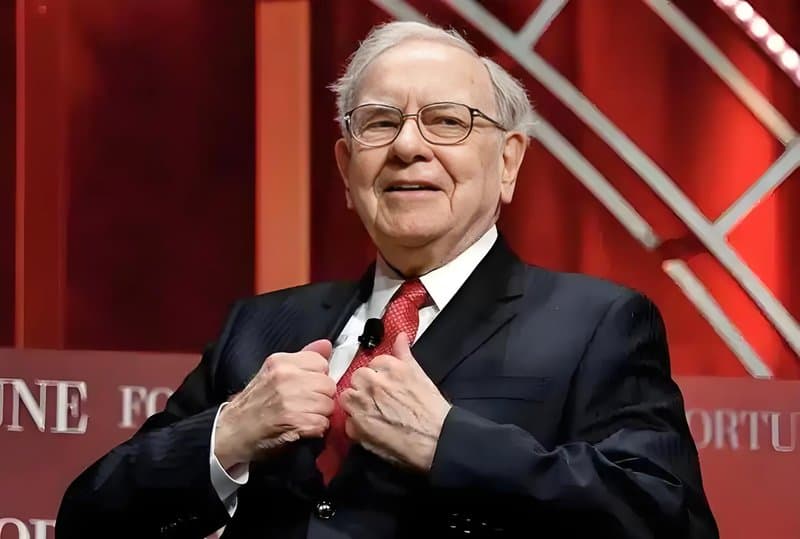
Buffett Responds to Market Speculation
Amidst ongoing market rumors, Warren Buffett, Chairman of Berkshire Hathaway, proactively responded to the media, clearly stating that the company has no plans to acquire new railway assets. This statement quickly quelled some speculation, yet also triggered an immediate reaction in the capital markets, with related railway stocks generally coming under pressure and declining.
Background and Meeting Content
According to insiders, in early August, Buffett and Berkshire's incoming CEO Greg Abel met with CSX CEO Joseph Hinrichs at their Omaha office. The meeting was conducted without advisors, in a direct and candid atmosphere.
During the exchange, Berkshire made it clear there would be no acquisition offer, but expressed a desire to explore deeper cooperation with CSX, such as sharing operational experience, optimizing line resource allocation, and collaborating on freight scheduling and energy use. These measures are believed to potentially bring about merger-like synergies without the complex acquisition integration process.
Market Reaction and Stock Fluctuations
Buffett's denial exerted short-term pressure on market sentiment. On the day the news was announced, CSX's stock price fell by about 5%, closing at $32.81 per share; Union Pacific and Norfolk Southern also dropped by more than 2%. In contrast, Berkshire Hathaway's stock experienced limited volatility, with just a slight decline of less than 1%.
Analysts pointed out that investors had previously anticipated a wave of consolidation in the railway industry, which Buffett's clarification temporarily dashed. The railway industry is highly capital-intensive, and the market often reacts sensitively to consolidation possibilities, thus acquisition rumors themselves can drive stock price fluctuations.
Continuation of Strategic Thinking
Despite denying any acquisitions, Buffett's interest in the railway industry remains undiminished. Berkshire has long been deeply involved in the US rail freight market through its subsidiary, BNSF Railway, and possesses extensive operational experience and network resources. Industry insiders believe that Buffett prefers to seek cooperation based on existing layouts rather than expanding territory through new acquisitions.
This strategy continues Berkshire's consistent investment logic: avoiding excessive risk while focusing on long-term value creation. Buffett has repeatedly emphasized that rail transport, as one of the arteries of the US economy, still has stable growth potential in the future, with efficiency improvements being key to industry competition.
Industry Outlook and Challenges
The US railway industry, after experiencing pandemic shocks and supply chain fluctuations, is facing triple pressures of efficiency, environmental protection, and cost. Rising fuel costs, increased truck transport competition, and stricter environmental regulations are all prompting railway companies to seek new breakthroughs.
Cooperation is seen as an important avenue for enhancing competitiveness. Strengthening collaboration between railway companies in technology, operations, and energy utilization could boost transport efficiency, lower unit costs, and thus address market challenges. This is also the deeper context of Buffett's meeting with Hinrichs.
Conclusion
Buffett's clear denial of acquiring a railway company indicates that Berkshire will continue to adhere to a robust path, rather than pursuing high-risk acquisitions. His exchange with CSX signals that cooperation to optimize efficiency may become a core direction for future industry development.
In the short term, related railway stock prices are under pressure from unmet expectations, but from a long-term perspective, inter-industry cooperation models may nurture new growth momentum. The market will continue to observe Berkshire's next moves in the railway sector and whether this strategy will usher in a new competitive landscape for the entire industry.