What is a Breakaway Gap?
A Breakaway Gap occurs when the price breaks through key support or resistance levels, resulting in a gap or discontinuity in the price chart. Breakaway Gaps are common in the price charts of stocks, futures, or other tradable assets, indicating significant changes in market sentiment and strength.
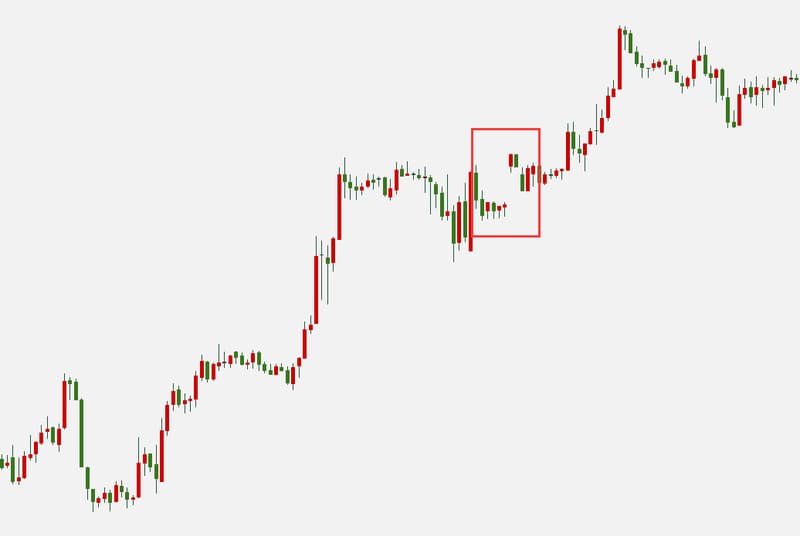
Breakaway Gaps can be either upward (Upward Breakaway Gap) or downward (Downward Breakaway Gap), depending on whether the price breaks above the resistance level or below the support level. In a Breakaway Gap, there's a noticeable gap between the previous trading day's closing price and the following trading day's opening price, creating a blank price area.
Types of Breakaway Gaps
The types of Breakaway Gaps depend not only on the direction of the price but also on the significance of the breakthrough resistance or support level, the extent of the breakthrough, and previous price patterns. Below are some common types of Breakaway Gaps in technical analysis.
- Upward Breakaway Gap: This occurs when the price breaks above the resistance level, creating an upward price gap. It indicates an increase in buying power, positive market sentiment, and the potential for further upward trends.
- Downward Breakaway Gap: This occurs when the price breaks below the support level, creating a downward price gap. It signifies an increase in selling power, negative market sentiment, and the likelihood of further downward trends.
- Upward Expansion Breakaway Gap: This happens when the price breaks above prior resistance levels or key price levels, forming a larger upward gap. It usually indicates stronger buying power and a more significant market sentiment shift, potentially leading to a substantial uptrend.
- Downward Expansion Breakaway Gap: This occurs when the price breaks below prior support levels or key price levels, creating a larger downward gap. It often signals stronger selling power and a more substantial market sentiment shift, possibly resulting in a considerable downtrend.
Characteristics of Breakaway Gaps
Breakaway Gaps are a type of price pattern in technical analysis that have distinct features and characteristics, helping investors identify and understand market trend reversals and signals. Here are some characteristics of Breakaway Gaps.
- Price Gap: The most noticeable feature of a Breakaway Gap is the price gap or discontinuity, where there's a pronounced gap between the previous trading day's closing price and the next trading day's opening price. This gap indicates a breakthrough of resistance or support levels and a significant shift in market sentiment.
- Breakthrough of Key Technical Levels: Breakaway Gaps typically occur when the price breaks through significant technical levels (such as support, resistance, trend lines, etc.). Such breakthroughs suggest a major trend reversal or the formation of a new trend.
- Change in Trading Volume: Breakaway Gaps usually coincide with high trading volumes. Upward Breakaway Gaps are often accompanied by substantial buying, while downward Breakaway Gaps are associated with significant selling. Increased volume further confirms the change in the price trend.
- Extent of the Gap: The extent of the Breakaway Gap is also a key characteristic. Breakaway Gaps can be either small or large, depending on the shift in market sentiment and strength. Larger gaps may indicate a stronger trend reversal or the formation of a new trend.
- Background and Prior Trend: The characteristics of Breakaway Gaps also consider the background and previous price trends. They usually occur after a period of accumulation or consolidation, potentially signaling a positive or negative shift in market sentiment and strength.
Uses of Breakaway Gaps
Breakaway Gaps have various applications in technical analysis. Here are some common uses.
- Confirming Trend Reversals: The appearance of a Breakaway Gap can confirm a market trend reversal. An Upward Breakaway Gap may indicate the end or reversal of a downward trend, while a Downward Breakaway Gap may indicate the end or reversal of an upward trend. Investors can use Breakaway Gaps as a signal of trend reversal, combined with other technical indicators for confirmation.
- Identifying Breakout Points: Breakaway Gaps can help determine breakout points. After a Breakaway Gap, the breakout point can be considered an important price level, potentially serving as the starting point for subsequent price increases or decreases. Investors can use these gaps to identify potential buying or selling opportunities and set appropriate stop-loss and target levels.
- Confirming Trend Acceleration: The extent of a Breakaway Gap can gauge the potential for trend acceleration. Larger Breakaway Gaps may indicate significant changes in market sentiment and strength, possibly leading to stronger trend acceleration. Investors can use the size of Breakaway Gaps to assess trend strength and durability and make trading decisions accordingly.
- Setting Stop-Loss and Target Levels: Breakaway Gaps can be used to set stop-loss and target levels. Based on the gap's shape and direction, investors can set stop-loss levels to manage risk and protect capital. Additionally, the extent of the gap can help set target levels, guiding investors on profit-taking points during trend continuation.